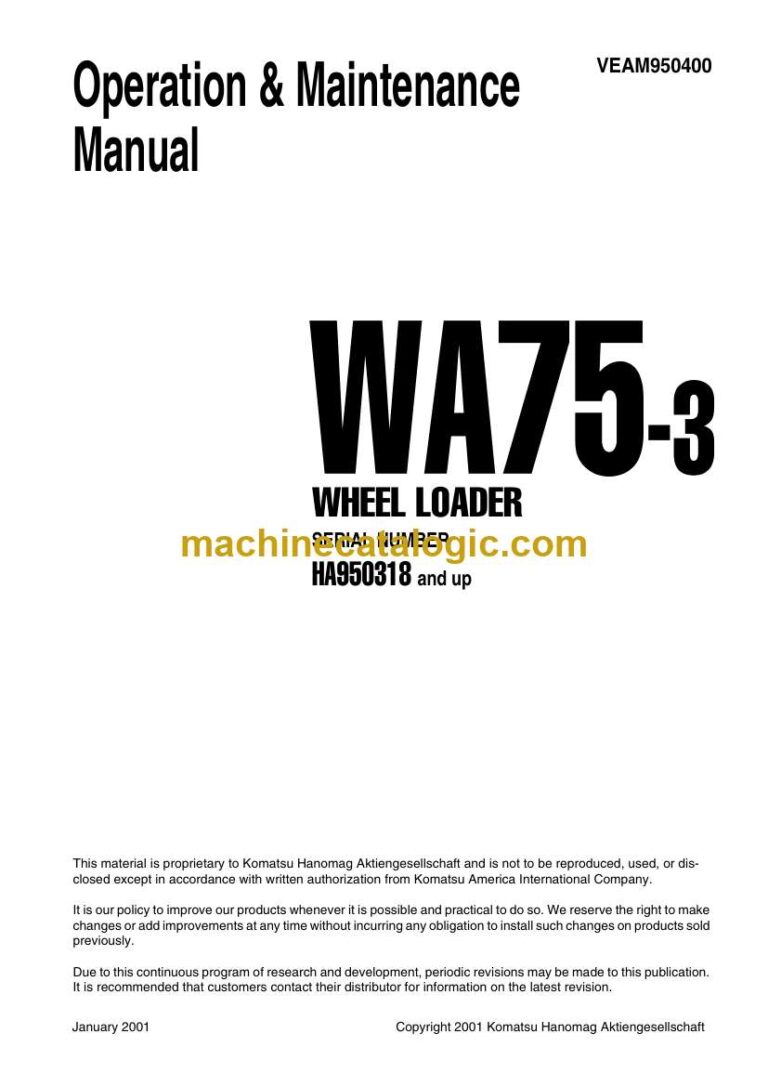
Komatsu WA75-3 Wheel Loader Operation and Maintenance Manual (VEAD950400)
A WA75-3 usually lives in tight yards, construction sites, and municipal work, loading trucks, feeding hoppers, and handling pallets all day. This Operation and Maintenance Manual helps you run it correctly and keep a steady service rhythm so it doesn’t let you down mid-shift. When, for example, the loader starts feeling sluggish on travel or the boom response changes, this book walks you through the basic checks and routine care you’d do before calling in major repairs.
Applications & Use Cases
- Plan preventive maintenance so services are grouped around actual machine hours and job schedules, cutting unplanned downtime.
- Trace early wear signs in pins, tires, and hydraulics by following the recommended inspection walk‑around.
- Verify daily and weekly checks operators should do before starting work, especially in dusty or muddy conditions.
- Align operating habits (idling, warm‑up, shutdown) with Komatsu’s guidance to extend component life.
- Support field troubleshooting by ruling out simple operation or maintenance issues before deeper diagnostics.
FAQ
Q: Can I keep this manual on a tablet in the cab?
A: Yes, it’s practical to use digitally; you can zoom diagrams and quickly search for procedures while parked.
Q: Is it worth printing certain pages?
A: Many techs print the checklists and maintenance charts to hang in the workshop or keep in a service folder.
Safety Note
Always lock out, support, and depressurize systems exactly as described before working on or under the loader.
Komatsu WA75-3 Wheel Loader Index:
- Main Menu
- Cover
- Product Publications Information
- Table of Contents
- Introduction
- Forword
- Safety Information
- Introduction
- Features
- Breaking in a New Machine
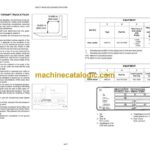
- Location of Plates, Table to Enter Serial No. and Distributor
- Machine Serial No. Plate position
- Engine Serial No. Plate Position
- Table to Enter Serial No. and Distributor
- EMISSION CONTROL WARRANTY
- EMISSION CONTROL WARRANTY STATEMENT (APPLIES TO CANADA ONLY)
- Engine Data Plate
- GARANTIE SUR LE CONTRÔLE DES ÉMISSIONS
- ÉNONCÉ DE GARANTIE SUR LE CONTRÔLE DES ÉMISSIONS (APPLICABLE AU CANADA SEULEMENT):
- Engine Data Plate
- Why You Should Read these Operating Instructions
- Notes on Safety Regulations
- Correct Use
- Safety Notes in the Operating Instructions
- Equipment
- Loading and Transporting the Machine
- Loading and Transporting the Machine
- Securing the Articulated Steering
- Lifting the Machine
- Driving Machine Onto Loading Area of Transport Vehicle
- Securing the Machine During Transport
- After Transport
- Safety
- General Safety Measures
- Safety Instructions
- Safety Devices
- Emergency Exit
- Clothing and Personal Protection
- Machine Modifications
- Before You Leave the Driver’s Seat
- Mounting and Dismounting
- Fire Prevention and Fire Fighting
- Protection Against Asbestos Dust
- Protection Against Injuries
- Working at High Temperatures
- Roll-Over Protection System (ROPS)
- Attachment for Protection Against Falling Objects (FOPS)
- Attachments
- Battery
- Safety Measures during Operation
- Before You Start the Engine
- Machine Operation
- Transport
- Safety Measures During Maintenance
- Personnel
- Prior to Start of Maintenance Measures
- During Maintenance
- Tires
- Labeling
- Position of Safety Labels
- Information Labels
- Controls and InDicators
- Overall View of Machine
- Controls and Indicators
- SWITCHES AND CONTROLS
- Instrument Panel
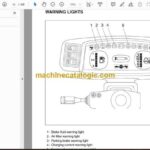
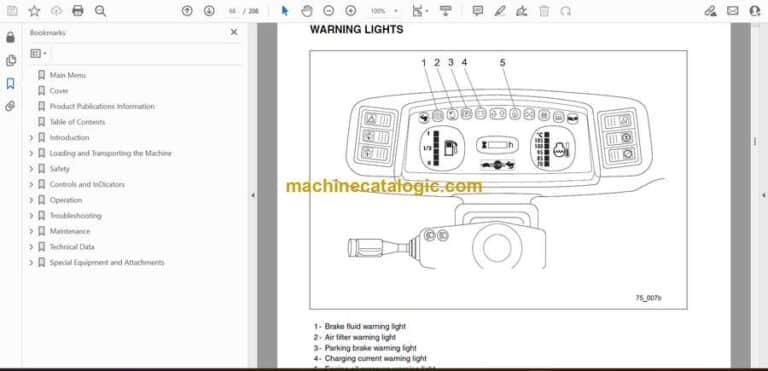
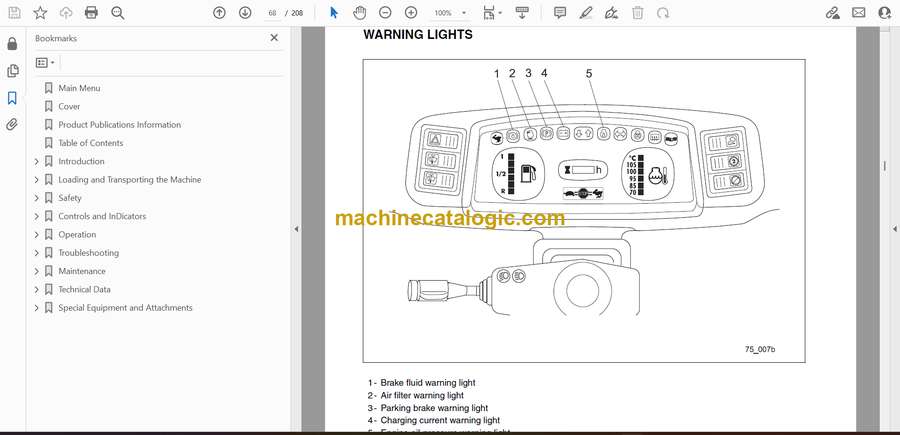
- Warning Lights
- Control Lamps
- Measuring Indicators
- Switches
- Control Levers, Pedals
- Articulated Steering Catch
- Traction Device
- Socket
- Door Unlocking System
- Alarm Horn for Reverse Driving
- Operation
- Running in the Machine
- Preparing the Machine Start
- Adjustments Prior to Machine Start
- Adjusting the Driver’s Seat
- Adjusting the Steering Column
- Adjusting the Armrest
- Adjusting the Rear-View Mirrors
- Adjusting the Heating and Ventilation System
- Putting on the Safety Belt
- Starting and Switching Off the Engine
- Starting the Engine
- Switching Off the Engine
- Driving
- Start-Up
- Changing the Driving Direction
- Reverse Driving
- Turning
- Braking
- Stopping
- Longer-Distance Driving
- Operating the Machine
- Preparing the Work Equipment
- Tire Service Life
- Loading
- Transporting
- Dumping / Unloading
- Planing
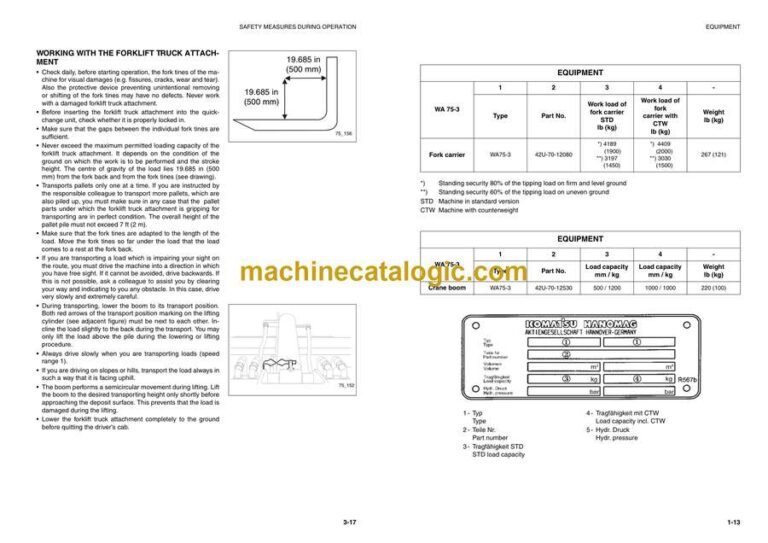
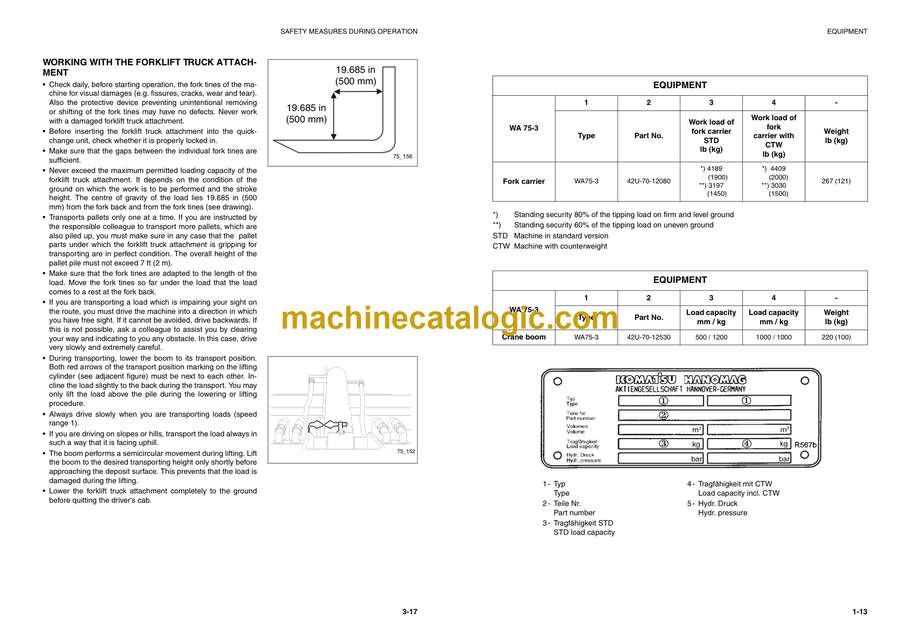
- Working With the Forklift Truck Attachment
- Precautions For Special Operations
- After the work is finished
- Instructions for Winter Operation
- Longer Standstill Periods of the Machine
- Troubleshooting
- Troubleshooting
- Warning Lights and Indicators
- Electrical System
- Engine
- Hydraulic system
- Brakes
- Axles
- driver’s cab
- Emergency Steering Characteristics
- Emergency Lowering System
- Starting the Engine with Battery Jumper CableS
- Starting the Engine
- Towing the Machine
- Towing a Machine with Defective Brakes
- Maintenance
- Maintenance Basics
- Preparing the Machine for Maintenance
- Cleaning the Machine
- Working-Area-Dependent Maintenance
- Lubricants and Operating Agents
- Axles
- Replacing Safety-Related Parts
- Spare Parts and Consumable Components
- Electrical System
- Tires
- Torque for Standard Nuts and Bolts
- Maintenance Schedule
- Maintenance Prior to Start
- Visual Checks
- Cooling System, Checking the Coolant Level, Topping off Coolant
- Engine, Checking the Oil Level, Topping off Oil
- Engine, Draining off Oil
- Checking the Fuel Level, Refueling
- Checking the Controls
- Checking the Parking Brake
- CHecking the Service Brake
- Checking the Electrical Connections
- Heater / ventilation: check blower
- Other Maintenance Measures Prior to Start
- Maintenance Every 10 Operating Hours
- Maintenance After the First 50 Operating Hours
- Engine, Changing Oil and Replacing the Oil Filter Cartridge
- V-Belt, Checking the Condition
- V-Belt, Checking and Adjusting the Tension
- Hydraulic System, Replacing the Filter Insert
- Checking and Tightening the Wheel Nuts
- Front and Rear Axle, Changing Oil
- Transfer Gear – Changing Oil
- Maintenance Every 50 Operating Hours
- Checking the cooling System, coolant level in the radiator and expansion tank
- Draining Off Water and Dirt Deposits From the Fuel Tank
- Checking the Service Brake and Oil Level, Refilling Oil
- Checking the Battery and Acid Level
- Lubrication
- Maintenance Every 100 Operating Hours
- Draining the Water Separator, Removing Water and Dirt Deposits
- Maintenance Every 250 Operating Hours
- Changing the Engine Oil and Oil Filter Cartridge
- Checking the V-Belt Condition
- Checking and Adjusting the V-belt Tension
- Front and Rear Axle, Checking the Oil Level
- Air Filter, Removing and Re-Installing the Filter Insert, Checking and Cleaning the Filter Insert
- Cleaning the Radiator Segments
- Lubrication
- Maintenance Every 500 Operating Hours
- Changing the Fuel Filter and Filter Element
- Changing the Filter Cartridge of the Hydraulic System
- Cleaning the Water Separator
- Lubrication
- Transfer Gear, Checking the Oil Level and Refilling Oil
- Air Filter, Replacing the Filter Insert, Replacing the Safety Filter
- Heater / ventilation: cleaning / replacing blower filter
- Maintenance Every 1000 Operating Hours
- Cooling System, Exchanging Coolant and Cleaning the System
- Front Axle, Oil Change
- Rear Axle, Oil Change
- Transfer Gear, Oil Change
- Service Brake
- Checking and Adjusting System Pressures
- Checking and Adjusting the Valve clearance
- Checking and Adjusting the Injection Nozzles, Nozzle Pressure and Fuel-Jet Pattern
- Checking the Accumulator Gas Pressure
- Maintenance Every 2000 Operating Hours
- Hydraulic System, Oil Change
- Bleeding the Hydraulic Oil Tank
- Cooling System, Checking the Antifreeze Content of the Coolant
- Checking the Cooling System
- Checking the Fuel Pump
- Checking the Fuel and Coolant Tubes, Replacing the Tubes (if required)
- Checking the Water Pump
- Checking and Adjusting the Fuel Injection and Injection time
- Technical Data
- Technical Data
- Noise Emission Levels
- Vibration Level
- Limit Values for Slopes
- Special Equipment and Attachments
- ALS-Electronics
- Structure and Functioning Principle of the ALS-Electronics
- PRECAUTIONARY MEASURES FOR SWITCHING ON THE ALS-ELECTRONICS
- Operation of the ALS-Electronics
- Handling of the Pressure Accumulator
Link Belt