$ 0
0
$ 0
0

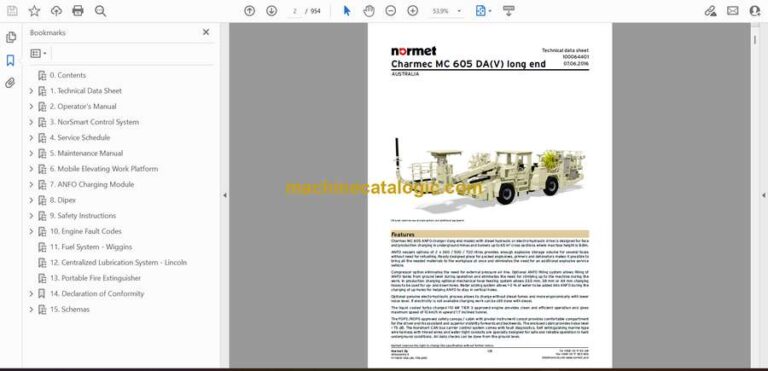
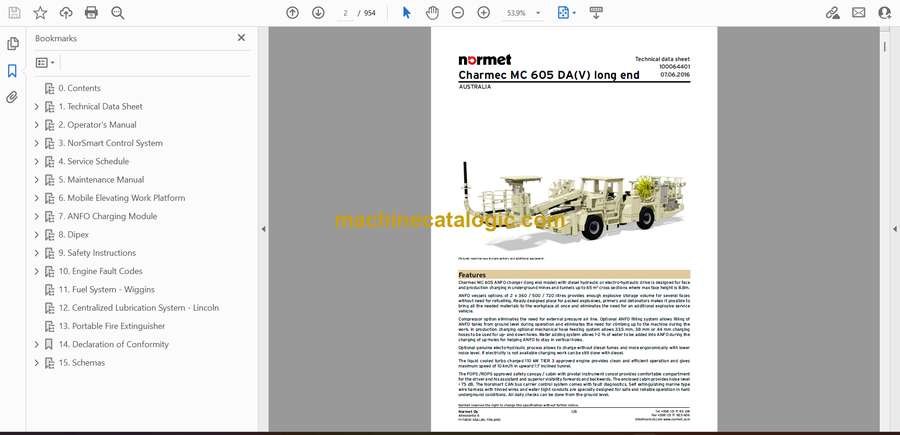
Normet Charmec MC605 DA(V) Long End Technical Information (5F7FE81_1000)

Format: PDF (Printable Document)

File Language: English

File Pages: 954

File Size: 33.95 MB (Speed Download Link)

Brand: Normet

Model: Charmec MC605 DA(V) Long End

Book No: 5F7FE81_1000

Type of Document: Technical Information

Categories: ,

$ 55

Share:

Normet Charmec MC605 DA(V) Long End Technical Information (5F7FE81_1000)

Normet Charmec MC605 DA(V) Long End Technical Information (5F7FE81_1000)

📘 Show Index

Normet Charmec MC605 DA(V) Long End Technical Information (5F7FE81_1000) Index:

  • 0. Contents
  • 1. Technical Data Sheet
    • 1.1 FOPS ROPS Conformance Certificate
    • 1.2. Wheels Magnetic Particle Inspection Report (P01-P40) GKN drawing 1020603
  • 2. Operator’s Manual
    • Charmec MC 605 DA(V)
    • Contents
    • 1. Introduction
      • 1.1. Carrier
      • 1.2. Carrier identification
      • 1.3. Frame Structure
        • 1.3.1. Engine end Frame
        • 1.3.2. Load end Frame
        • 1.3.3. Oscillation
      • 1.4. Engine
        • 1.4.1. General
        • 1.4.2. Exhaust system
      • 1.5. Hydrodynamic Transmission
        • 1.5.1. General
        • 1.5.2. Torque Converter
        • 1.5.3. Torque converter with turbine lock
        • 1.5.4. Transmission
        • 1.5.5. Transmission Controls
      • 1.6. Mechanical Transmission
        • 1.6.1. General
        • 1.6.2. Driveshafts
        • 1.6.3. Axle assemblies
      • 1.7. Hydraulics
        • 1.7.1. Pumps
        • 1.7.2. Brakes
        • 1.7.3. Steering
    • 2. Safety Rules
      • 2.1. General Safety Rules
      • 2.2. Operating Safety Rules
      • 2.3. Safety Labels
    • 3. Operator Controls
      • 3.1. Dashboard
        • 3.1.1. Switches
        • 3.1.2. NorSmart Control System
        • 3.1.3. Common Warning
      • 3.2. Engine Control System
      • 3.3. Main Switch
      • 3.4. Circuit Breakers
      • 3.5. Driving Controls
      • 3.6. Seat
      • 3.7. Emergency Stop
      • 3.8. Windshield Wipers
      • 3.9. Air Conditioning
    • 4. Operation and Use
      • 4.1. Commissioning On Delivery
      • 4.2. Daily Operation
        • 4.2.1. Daily Maintenance Operations
        • 4.2.2. Instrumentation Checks
        • 4.2.3. Testing the Brakes
      • 4.3. Driving The Carrier
        • 4.3.1. General
        • 4.3.2. Before Start
        • 4.3.3. Engine Start
        • 4.3.4. Gear Shifting
        • 4.3.5. Steering
        • 4.3.6. Setting the Carrier in Motion
        • 4.3.7. Driving on Slopes
        • 4.3.8. Road Driving
        • 4.3.9. Stopping
      • 4.4. Carrier Transfer
        • 4.4.1. Towing
        • 4.4.2. Lifting
        • 4.4.3. Lowering the Carrier Down a Mine
      • 4.5. Special Operating Conditions
        • 4.5.1. Winter Operation
        • 4.5.2. High Ambient Temperature, High Altitude
        • 4.5.3. Jump Start
        • 4.5.4. Cleaning Protective Treatment
    • Notes
  • 3. NorSmart Control System
    • NorSmart platform
    • 1. GENERAL
      • 1.1. Purpose of the system
      • 1.2. Warnings and notifications
      • 1.3. Definitions, terms and abbreviations used
    • 2. General description of the system
      • 2.1. Remote Display (RD)
      • 2.2. Multi Information Controller (MIC)
      • 2.3. Can Hub Module (HUB)
      • 2.4. Controller Module HCM2000
      • 2.5. Controller Module HCM3100
      • 2.6. Controller Module HCM3200
    • 3. User Interface
      • 3.1. Navigation in the user interface
      • 3.2. Adjusting values
      • 3.3. Access rights of the user interface
      • 3.4. Pop-up windows of the user interface
      • 3.5. User interface alerts
      • 3.6. Drive Display (1)
      • 3.7. Process Display (2)
      • 3.8. Process Control (3)
      • 3.9. Data Logging (4)
        • 3.9.1. Process log window (4.1)
        • 3.9.2. Alerts window (4.2)
        • 3.9.3. Platform operating hours (4.3)
        • 3.9.4. File transfer settings (4.4)
      • 3.10. Display settings window (5)
      • 3.11. Advanced settings window (6)
        • 3.11.1. Access level selection (6.1)
        • 3.11.2. Commercial options (6.2)
        • 3.11.3. Factory & default parameters (6.3)
        • 3.11.4. System versions and settings (6.4)
        • 3.11.5. System backup (6.5)
      • 3.12. Process maintenance (7)
      • 3.13. Vehicle maintenance window (8)
        • 3.13.1. Platform parameters (8.1)
        • 3.13.2. Pedal calibrations (8.2)
        • 3.13.3. Engine and drivetrain (8.3)
        • 3.13.4. Drive speed calibration (8.4)
        • 3.13.5. Inclinometer calibration (8.5) (Optional)
      • 3.14. Boom maintenance window (9)
        • 3.14.1. Boom control parameters (9.1)
        • 3.14.2. Joystick calibrations (9.2)
        • 3.14.3. Boom adjustments (9.3)
      • 3.15. Diagnostics window (10)
        • 3.15.1. Module I/O diagnostics (10.1)
        • 3.15.2. Camera view (10.2)
        • 3.15.3. Support leg diagnostics (10.3)
        • 3.15.4. Measures (10.4)
        • 3.15.5. CAN diagnostics (10.5)
    • 4. FUNCTIONS
      • 4.1. Starting up the system
      • 4.2. System update
      • 4.3. System backup
      • 4.4. System backup restoration
      • 4.5. Changing the access level using a code or a login key
        • 4.5.1. Changing the access level using a code
        • 4.5.2. Changing the access level using a login key
    • 5. Appendices
      • APPENDIX 1. System alert and info texts
        • Table 1:
        • Table 1:
      • APPENDIX 2. I/O-errors
      • APPENDIX 3. Warning symbol explanations
  • 4. Service Schedule
    • 4.1 Filling capacities and classifications EN 4_2019 DJ390
  • 5. Maintenance Manual
    • Carrier
    • Contents
    • 1. Safety precautions
      • 1.1. Service
      • 1.2. Hydraulics
      • 1.3. Other precautions
    • 2. Oil samples
      • 2.1. Evacuation and sample line operation
      • 2.2. Sample lines
    • 3. Engine
      • 3.1. Lubricant Recommendations
        • 3.1.1. Service Products
        • 3.1.2. Diesel Fuels
        • 3.1.3. Fame Fuels
        • 3.1.4. Engine Oils
        • 3.1.5. Coolant
      • 3.2. General
      • 3.3. Procedures
        • 3.3.1. Daily or once per shift (10 h)
          • Check the engine oil level.
          • Check the fuel level.
          • Check the air cleaner.
          • Check the coolant level.
          • Check the fuel pre-filter
        • 3.3.2. Every 500 hours
          • Replace the engine oil filter.
          • Change the engine oil.
          • Check the battery and clean battery terminals.
          • Check the coolant additive concentration.
          • Clean catalytic exhaust gas purifier.
          • Check the poly -V-belt condition.
          • Adjust the valve clearance.*
        • 3.3.3. Every 1000 hours
          • Check the engine.
          • Check the lines and hoses.
          • Check the air cleaner intake pipe.
          • Replace the intake air cleaner filter.
          • Check the cooling and heating system.
        • 3.3.4. Every 1500 hours
          • Adjust the valve clearance.
          • Replace the fuel filter element.
          • Clean the fuel prefilter element. (OM904LA engine)
          • Replace the fuel pre-filter insert.
          • Change the coolant.
      • 3.4. Troubleshooting
    • 4. Powershift transmission
      • 4.1. Lubricant recommendations
      • 4.2. Procedures
        • 4.2.1. Daily or once per shift (10 hours)
          • Check the transmission oil level.
        • 4.2.2. Every 500 hours
          • Replace the transmission oil filter.
        • 4.2.3. Every 1000 hours
          • Change the transmission oil.
      • 4.3. Troubleshooting
        • 4.3.1. General
        • 4.3.2. Procedures
        • 4.3.3. Troubleshooting guide
    • 5. Mechanical transmission
      • 5.1. Lubricant Recommendations
      • 5.2. Procedures
        • 5.2.1. Daily or once per shift (10 hours)
          • Check the tyres visually.
        • 5.2.2. Weekly (50 hours)
          • Lubricate the propeller shaft greasing fittings.
          • Check tyre pressure and condition.
          • Check the drive line bolts.
        • 5.2.3. Every 125 hours
          • Check the axle differential oil level.
        • 5.2.4. Every 250 hours
          • Check the wheel nuts.
          • Check the axle planetary gear oil level.
        • 5.2.5. Every 500 hours
          • Check the brake plate wear.
          • Change the axle differential oil.
        • 5.2.6. Every 1000 hours
          • Change the axle planetary gear oil.
        • 5.2.7. As required
          • Air bleed the service brakes.
          • Air bleed the safety/parking brakes.
      • 5.3. Troubleshooting
    • 6. Hydraulic system
      • 6.1. Lubricant Recommendations
      • 6.2. Pressure accumulator safety precautions
      • 6.3. Procedures
        • 6.3.1. Daily or once per shift (10 hours)
          • Check the hydraulic fluid level.
          • Check there are no leaking or hanging hoses.
        • 6.3.2. Every 500 hours
          • Check the pressure accumulators
          • Replace the hydraulic return fluid filter.
          • Change the hydraulic fluid.
        • 6.3.3. Every 1000 hours
          • Accumulator gas pressure test.
        • 6.3.4. As required maintenance
          • Check the steering hydraulic pressure.
          • Check and adjust the charging pressure.
          • Check the service brake pressure.
          • Check and adjust the safety/parking brake pressure.
      • 6.4. Troubleshooting
        • 6.4.1. Steering
        • 6.4.2. Service brakes
        • 6.4.3. Safety/parking brakes
    • 7. Frame
      • 7.1. Lubricant Recommendations
      • 7.2. Procedures
        • 7.2.1. Weekly (50 hours)
          • Lubricate the carrier greasing fittings.
        • 7.2.2. Every 1000 hours
          • Check the oscillation axle bushings.
          • Check the frame joint bearings.
          • Check the steering cylinder joint pin, pin locking and bearing.
    • 8. Enclosed Cabin Equipments
      • 8.1. Procedures
        • 8.1.1. Daily or once in shift (10 hours)
          • Fill up the windshield washer reservoir.
        • 8.1.2. Every 500 hours
          • Change or clean the cabin fresh air filter weave.
        • 8.1.3. Every 2 years
          • Change the air conditioning system dryer.
        • 8.1.4. As required maintenance
          • Ensure efficient operation of the air conditioning:
    • 9. Tightening torques
      • 9.1. Screws
      • 9.2. Screws with locking washers
        • 9.2.1. Wedge lock washers (e.g. Wurth®, HEICO®)
        • 9.2.2. Nord-lock® Steel washers
  • 6. Mobile Elevating Work Platform
    • Mobile Elevating Work Platform
    • Contents
    • 1. Foreword
    • 2. Introduction
      • 2.1. General
      • 2.2. Boom
      • 2.3. Work platform
    • 3. Safety instructions
      • 3.1. General
      • 3.2. Operation
      • 3.3. Maintenance
      • 3.4. Emergency stop
      • 3.5. In Case Of Danger
      • 3.6. Environment
    • 4. Instructions for the owner and operator
      • 4.1. Operator Suitability
      • 4.2. Responsibility
    • 5. Operator’s controls
      • 5.1. Work platform controls
      • 5.2. Lower controls
      • 5.3. Terminal box TB3
      • 5.4. Work platform terminal box TB4
      • 5.5. Cabin joystick
      • 5.6. Alarm unit
      • 5.7. Safety canopy locking
    • 6. Operation
      • 6.1. Preparations
      • 6.2. Use of the MEWP
      • 6.3. Daily checks
      • 6.4. Operation definitions
      • 6.5. Safety harness
      • 6.6. Extreme conditions
    • 7. Transport and storage
      • 7.1. Driving
      • 7.2. Storage
      • 7.3. Lifting
      • 7.4. Commissioning on delivery
    • 8. Maintenance
      • 8.1. General
      • 8.2. Greasing
      • 8.3. Schedule
      • 8.4. Maintenance items
        • 8.4.1. Daily or once in shift (10 hours)
          • Visually check the hydraulic hoses, couplings and the structure.
          • Check the tilting cylinder pin and work platform joint pin.
          • Keep the working area of the work platform clean.
          • Check the boom limit switch
        • 8.4.2. Weekly (50 hours)
          • Lubricate the grease fittings.
          • Check the boom mounting attachment.
          • Inspect the hydraulic cylinder, cylinder joint pin, pin locking and bearing.
        • 8.4.3. Every 250 hours
          • Check the boom extension clearance.
        • 8.4.4. Every 500 hours
          • Check the hydraulic pressures.
          • Inspect the turning joint lug welding.
          • Inspect the tilt cylinder fixing lug welding.
          • Inspect the condition of the boom beams.
          • Inspect the function of the load-lowering valve.
          • Inspect the boom mounting bolt connections.
        • 8.4.5. Every 1000 hours
          • Accumulator gas pressure test.
        • 8.4.6. Every 2000 hours
          • Change the tilting cylinder joint pin and bearing.
        • 8.4.7. Every 6000 hours
          • Change the tilting cylinder.
        • 8.4.8. Every 1 year
          • Adjust the boom lowering speed.
          • Adjust the boom slewing speed.
          • Adjust the load sensing system
    • 9. Specification
      • 9.1. Speed values
      • 9.2. Sticker
        • 9.2.1. General instructions
        • 9.2.2. Daily checks
    • 10. Troubleshooting
  • 7. ANFO Charging Module
    • 7.1 Torque Actuator
    • 7.2 Charging Hose
    • Operation and maintenance
    • Contents
    • 1. Technical information
      • 1.1. Foreword
      • 1.2. Technical Specification
      • 1.3. ANFO
    • 2. Charging Technique
      • 2.1. Pneumatic Loaders
      • 2.2. Charging Carrier
      • 2.3. Mobile Elevating Work Platform
      • 2.4. Compressed Air
      • 2.5. Charging The Round
      • 2.6. Smooth Wall Blasting
    • 3. Safety Aspects
      • 3.1. Static Electricity
      • 3.2. Electrical Hazards
      • 3.3. Chemical Reaction
    • 4. Operational Safety Rules
      • 4.1. General Instructions
      • 4.2. Work Instructions
    • 5. Operator Controls
      • 5.1. Charging Hand Valve
      • 5.2. Charging Pedal
      • 5.3. Selecting the Pressure Vessel
      • 5.4. Hose Connections
      • 5.5. Pressure Release Valves For Charging Hose
      • 5.6. Connector Sets
      • 5.7. Emergency stop
    • 6. Filling the Vessel
      • 6.1. Procedure
    • 7. Preparatory Tasks
      • 7.1. Adjustments
      • 7.2. Charging Start-up
    • 8. Blowing
      • 8.1. Borehole Cleaning
    • 9. Charging
      • 9.1. Charging The Borehole
      • 9.2. Charging Faults
    • 10. Maintenance Safety Rules
      • 10.1. Hot Work During Maintenance
      • 10.2. Fire Prevention Measures
      • 10.3. General Instructions
      • 10.4. Maintenance Instructions
    • 11. Maintenance
      • 11.1. General
      • 11.2. Maintenance Schedule
        • 11.2.1. Daily or once per shift (10 hours)
          • Drain water from the modular type air filter.
          • Drain water from the water separator.
          • Check the lubricator drippage amount and oil level.
          • Keep the pressure vessel and charging unit clean.
          • Check the interior and exterior condition of the vessel.
          • Check the wear of the charging hose.
          • Check the total resistance between earthing strap and free end of the charging hose.
          • Check the resistance between earthing strap and ANFO charger quick acting coupling.
        • 11.2.2. Every 500 Hours
          • Clean the modular type air filter element.
          • Measure the earthing strap resistance.
        • 11.2.3. As Required
          • Change the water separator filter element
          • Fix the connections of the earthing straps and earthing points.
          • Replace the earthing straps.
  • 8. Dipex
    • 8.2. Dipex_dinlog_system_light
    • 8.3. DINLOG-manual for standard logger with simple panel 27.5.2009
    • 1. Dipex continuous regenerating particulate filter
    • 2. Maintenance
      • 2.1. Procedures
        • 2.1.1. Daily or once per shift (10 hours)
        • 2.1.2. Every 500 hours
  • 9. Safety Instructions
    • Normet Carriers and Equipments
    • Contents
    • 1. Foreword
    • 2. Safety Instructions in Manuals
      • 2.1. Operator manual
    • 3. Instructions and Warnings
    • 4. General Safety Instructions
    • 5. Instructions for the Owner and Operator
      • 5.1. Working environment
      • 5.2. Personnel
      • 5.3. Distribution of liability
      • 5.4. Training
    • 6. Operator Suitability and Responsibility
      • 6.1. Suitability
      • 6.2. Responsibility
    • 7. Maintaining Safety
    • 8. Carrier
      • 8.1. Prior to operation
      • 8.2. Starting up
      • 8.3. Driving
      • 8.4. Operation
      • 8.5. Ending of shift
      • 8.6. Stopping
      • 8.7. Towage
      • 8.8. Diesel engine
      • 8.9. Transport
      • 8.10. Service of batteries
    • 9. Mobile Elevating Work Platform
      • 9.1. Safety Instructions For Lifting Platform Operation
    • 10. Lifting Cargo
      • 10.1. Taking The Lifter Into Use
      • 10.2. Instructions For Safe Lifting
      • 10.3. Lifting
    • 11. Concrete Spraying
      • 11.1. General
      • 11.2. Pump and boom
      • 11.3. Operating
      • 11.4. Cleaning
    • 12. Anfo Charging
      • 12.1. General
      • 12.2. Instructions
      • 12.3. Explosives
      • 12.4. Work
      • 12.5. Hot work
      • 12.6. Fire prevention
    • 13. Emulsion Charging
      • 13.1. General instructions
    • 14. Electric System
      • 14.1. Electric circuit
      • 14.2. Electric lines
      • 14.3. Contact with an electric line
      • 14.4. In case of bodily injury
      • 14.5. Service of electric equipment
    • 15. Hydraulic System
    • 16. Compressed Air and Water Systems
    • 17. Maintenance and Service
      • 17.1. General
      • 17.2. Carrier
      • 17.3. Engine
      • 17.4. Oils and greases
      • 17.5. Adding fuel
      • 17.6. Safety Instructions for Servicing the Booms
      • 17.7. Safety Instructions For Servicing The Lifting Platform
      • 17.8. Welding
    • 18. Environmental Instructions
      • 18.1. Introduction
      • 18.2. Fuels
      • 18.3. Oils and oily waste
      • 18.4. Coolants
      • 18.5. Cleaning solutions
      • 18.6. Rubber
      • 18.7. Batteries
      • 18.8. Metals
      • 18.9. Worn components
      • 18.10. Disposing the Normet product
  • 10. Engine Fault Codes
    • 8. Diagnostics
      • 8.1. J1939 Diagnostic Messages
      • 8.2. Fault Codes
        • 8.2.1. Conversion Method
        • 8.2.2. Fault Codes for CPC4-ECAN and MR2
      • 8.3. Actual Values
        • 8.3.1. Analog Values
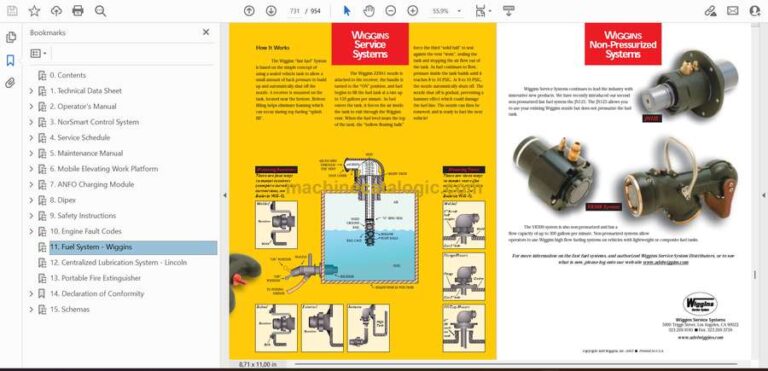
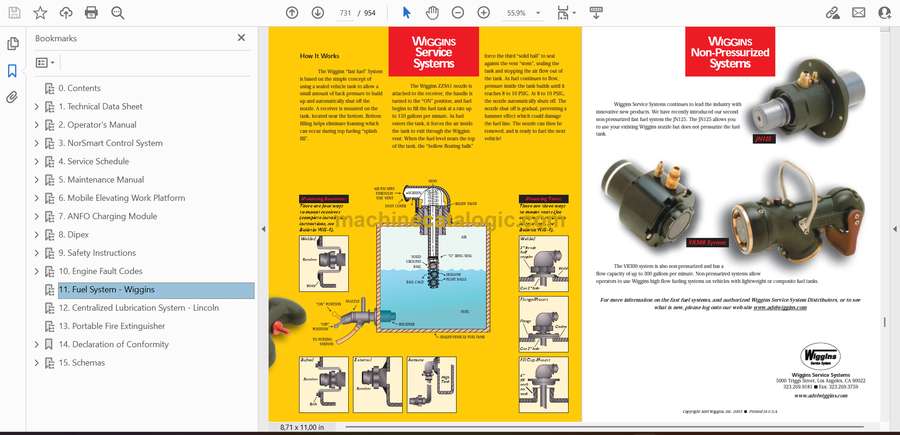
  • 11. Fuel System – Wiggins
  • 12. Centralized Lubrication System – Lincoln
  • 13. Portable Fire Extinguisher
  • 14. Declaration of Conformity
    • 14.1. Declaration of conformity SPS10155
    • 14.2. Declaration of conformity SPS10156
  • 15. Schemas
    • e3_EN
    • Hyd
      • 100138918_0_1
        • 1
        • =A10
          • 2
        • =C01
          • 3
        • =C02
          • 4
        • =C03
          • 5
        • =C04
          • 6
        • =C06
          • 7
        • =H01
          • 8
        • =H02
          • 9
        • =H03
          • 10
        • =H04
          • 11
        • =H06
          • 12
        • =H07
          • 13
        • =H09
          • 14
        • =H30
          • 15
        • =S01
          • 16
        • =S02
          • 17
        • =S3
          • 18
        • =S3.1
          • 19
        • =S3.2
          • 20
    • Ele
      • 100139550_1_1
        • 1
        • 2
        • 3
        • 4
        • 5 =MM +TB1
        • 6 =MM +TB1
        • 7 =MM +TB1
        • 8 =CM +TB7
        • 9 =CM +TB7
        • 10 =FM +TB3
        • 11 =BM +TB4
        • 12 =BM +TB4
        • 13 =BM +TB4
        • 14 =CM +CD
        • 15 =RM +TB5
        • 16 =CM +CD
        • 17 =RM +TB5
        • 18 =RM +TB5
        • 19
        • 20
        • 21
        • 22 =MM +TB1
        • 23 =MM +TB1
        • 24 =MM +TB1
        • 25 =MM +TB1
        • 26 =MM +TB1
        • 27 =MM +TB1
        • 28 =MM +TB1
        • 29 =MM
        • 30 =MM +TB1
        • 31 =MM +TB1
        • 32 =MM +TB1
        • 33 =MM +TB1
        • 34 =MM +TB1
        • 35 =MM +TB1
        • 36 =MM +TB1
        • 37 =MM +TB1
        • 38 =MM +TB1
        • 39 =MM +TB1
        • 40 =MM +TB1
        • 41 =MM +TB1
        • 42 =MM
        • 43 =MM +TB1
        • 44 =MM +TB1
        • 45 =CM +TB7
        • 46 =CM
        • 47 =CM +TB7
        • 48 =CM +TB7
        • 49 =CM +TB7
        • 50 =CM +TB7
        • 51 =CM +TB7
        • 52 =CM +TB7
        • 53 =CM +CD
        • 54 =CM +CD
        • 55 =CM +CD
        • 56 =CM +CD
        • 57 =CM +CD
        • 58 =CM +CD
        • 59 =CM +CD
        • 60 =CM +CD
        • 61 =CM +CD
        • 62 =CM +CD
        • 63 =CM +CD
        • 64 =CM +CD
        • 65 =CM +CD
        • 66 =CM +CABIN
        • 67 =CM +CABIN
        • 68 =CM +CABIN
        • 69 =CM +CABIN
        • 70 =FM +TB3
        • 71 =FM +TB3
        • 72 =FM +TB3
        • 73 =FM +TB3
        • 74 =FM +TB3
        • 75 =FM +TB3
        • 76 =FM +TB3
        • 77 =FM +TB3
        • 78 =FM +TB3
        • 79 =FM +TB3
        • 80 =FM +TB3
        • 81 =FM +TB3
        • 82 =FM +TB3
        • 83 =FM +TB3
        • 84 =FM +TB3
        • 85 =FM +TB3
        • 86 =FM +TB3
        • 87 =FM +TB3
        • 88 =FM +TB3
        • 89 =FM +TB3
        • 90 =BM +TB4
        • 91 =BM +TB4
        • 92 =BM +TB4
        • 93 =BM +TB4
        • 94 =BM +TB4
        • 95 =BM +TB4
        • 96 =BM +TB4
        • 97 =BM +TB4
        • 98 =BM +TB4
        • 99 =BM +TB4
        • 100 =BM +TB4
        • 101 =BM +TB4
        • 102 =RM +TB5
        • 103 =RM +TB5
        • 104 =RM +TB5
        • 105 =RM +TB5
        • 106 =RM +TB5
        • 107 =RM +TB5
        • 108 =RM +TB5
        • 109 =RM +TB5
        • 110 =RM +TB5
        • 111 =RM +TB5
        • 112 =RM +TB5
        • 113 =MM
        • 114 =MM
        • 115
        • 116
        • 117

Normet

Latest Product

0
    0
    Your Cart
    Your cart is emptyReturn to Shop