Format: PDF (Printable Document)
File Language: English
File Pages: 89
File Size: 3.89 MB (Speed Download Link)
Brand: MacLean Engineering
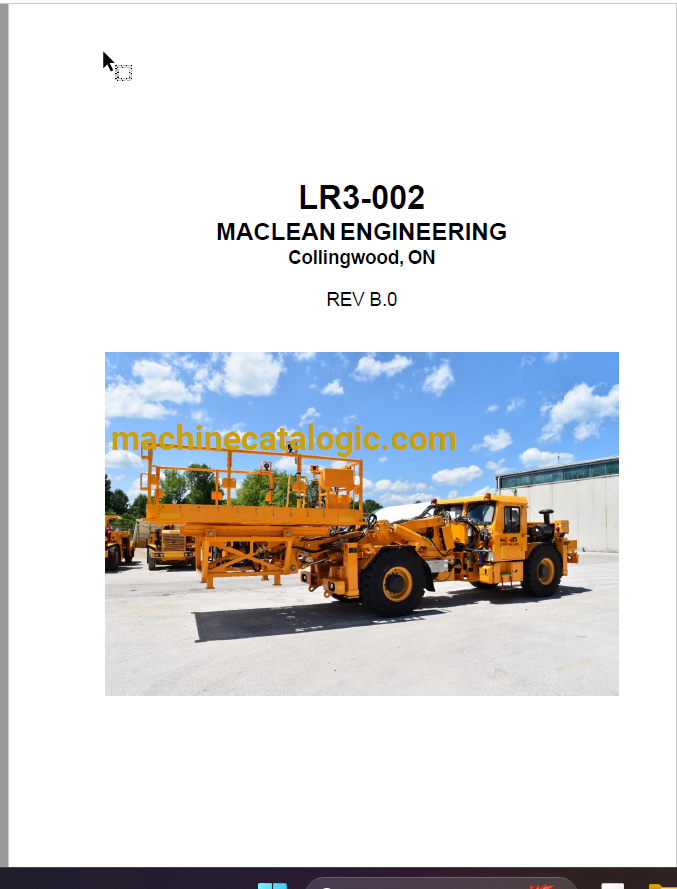
Model: LR3-002
Type of Document: Operator Manual
$ 45
This MacLean LR3-002 Operator Manual is what I’d keep in the cab or the workshop when I’m running or supporting a MacLean unit underground or in a tight construction site. These machines usually work in low-visibility, uneven ground, hauling or handling heavy loads where a mistake gets expensive fast. This document helps you understand what each control actually does under load, how the machine should “feel” when it’s working right, and what to check daily so you don’t lose a shift to a simple issue. For example, if the boom response suddenly feels jerky on rough ground, this manual helps you verify your operating sequence and basic checks before you start blaming hydraulics.
Applications & Use Cases
FAQ
Q: Can I keep this manual on a tablet in the cab?
A: Yes, it’s practical to use digitally; just make sure the screen is bright enough and protected from dust and vibration.
Q: Is it worth printing parts of it?
A: I’d print the daily checks, control layout, and basic troubleshooting pages and laminate them for quick reference underground.
Safety Note
Always follow the manual’s operating limits and never push the machine on slopes or loads you’re not sure it can handle.
TABLE OF CONTENTS
GENERAL SAFETY…………………………………………………………………………………. 6
2.1 General Safety Precautions …………………………………………………………………………………. 6
2.2 OPERATING SAFETY ………………………………………………………………………………………… 7
2.3 Operating Safety Precautions ……………………………………………………………………………….. 7
2.4 SERVICING SAFETY ………………………………………………………………………………………….. 8
2.4.1 General Servicing Safety ……………………………………………………………………………….. 8
2.5 FIRE PREVENTION SAFETY ………………………………………………………………………………. 8
2.5.1 Fire Prevention Safety Precautions ………………………………………………………………….. 8
2.6 HYDRAULIC SAFETY …………………………………………………………………………………………. 9
2.6.1 Hydraulic Safety Precautions ………………………………………………………………………….. 9
2.6.2 Working with Hydraulic Oils and Systems …………………………………………………………. 9
2.6.3 Hazards when Working on Hydraulic Systems …………………………………………………. 10
2.6.4 Fire and Explosion Risks ………………………………………………………………………………. 12
2.6.5 Maintenance of Hydraulic Systems ………………………………………………………………… 12
2.7 ELEVATING WORK PLATFORM (BOOM AND BASKET) ……………………………………….. 12
2.7.1 General Information …………………………………………………………………………………….. 12
2.7.2 Elevating Work Platform Labels …………………………………………………………………….. 12
2.7.3 Elevating Work Platform Design Ratings …………………………………………………………. 14
2.7.4 Elevating Work Platform Responsibilities ………………………………………………………… 14
2.8 EMERGENCY LOWERING SYSTEM (BOOM AND BASKET) …………………………………. 16
2.8.1 Emergency Lowering System ………………………………………………………………………… 16
2.9 FALL ARREST – TRAVEL RESTRAINT ANCHOR ………………………………………………….. 18
2.9.1 General Information …………………………………………………………………………………….. 18
LAYOUT ………………………………………………………………………………………………. 19
3.1 MACHINE CONFIGURATION …………………………………………………………………………….. 19
3.1.1 General Information …………………………………………………………………………………….. 19
MODES OF OPERATION AND INTERLOCKS ………………………………………….. 20
4.1 Modes of Operation …………………………………………………………………………………………… 20
4.2 Vehicle Interlocks ………………………………………………………………………………………………. 21
4.2.1 Automatic Brake Application (ABA) Interlock …………………………………………………… 21
4.2.2 Drive/Auxiliary mode Interlock ……………………………………………………………………….. 21
4.2.3 Fast Idle Interlock ………………………………………………………………………………………… 21
4.2.4 Transmission Neutralizer Interlock …………………………………………………………………. 21
4.2.5 Mode Change Interlock ………………………………………………………………………………… 22
4.2.6 Basket Installed/Hitch Pin Extended Interlock ………………………………………………….. 22
4.2.7 Boom Position/Basket Installed/Hitch Pin Interlock …………………………………………… 22
4.2.8 Boom Position/Swing Angle Restriction Interlock ……………………………………………… 22
4.2.9 Boom Position Auto Stop ……………………………………………………………………………… 22
4.2.10 Boom Retract/Boom Lift Angle Interlock ………………………………………………………. 22
4.2.11 Deck Raised Brake Interlock ………………………………………………………………………. 23
4.2.12 Outrigger Up/Boom Position Interlock ………………………………………………………….. 23
4.2.13 Ride Control System on Boom …………………………………………………………………… 23
4.2.14 Machine Stability Interlocks ……………………………………………………………………….. 23
MACHINE SAFETY ITEMS …………………………………………………………………….. 26
5.1 Safety Items …………………………………………………………………………………………………….. 26
5.1.1 Mounting and Dismounting Best Practice ………………………………………………………… 26
5.1.2 Fire Extinguisher …………………………………………………………………………………………. 26
5.1.3 Articulation Lock Bar ……………………………………………………………………………………. 27
5.1.4 Emergency/Park Brake Button(s) and Ignition Switch ……………………………………….. 28
5.1.5 Main Battery Disconnect Switch …………………………………………………………………….. 28
5.1.6 Emergency Stop Buttons ……………………………………………………………………………… 29
5.1.7 Inclinometer ……………………………………………………………………………………………….. 30
5.1.8 Hydraulic Systems Safety …………………………………………………………………………….. 30
5.1.9 Parking Light (if equipped) ……………………………………………………………………………. 31
5.1.10 Directional Indicator Lights (if equipped) ………………………………………………………. 32
5.1.11 Emergency Lowering System …………………………………………………………………….. 32
5.2 FIRE SUPPRESSION SYSTEM ………………………………………………………………………….. 32
5.2.1 General Information …………………………………………………………………………………….. 32
5.2.2 Fire Suppression Nozzles …………………………………………………………………………….. 34
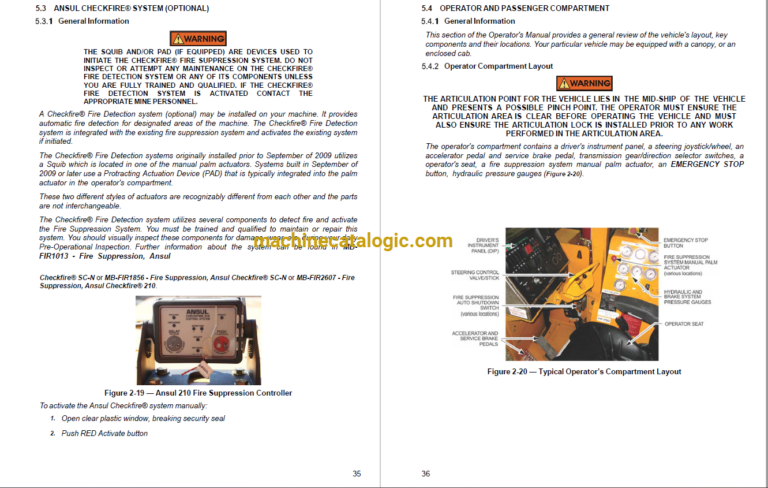
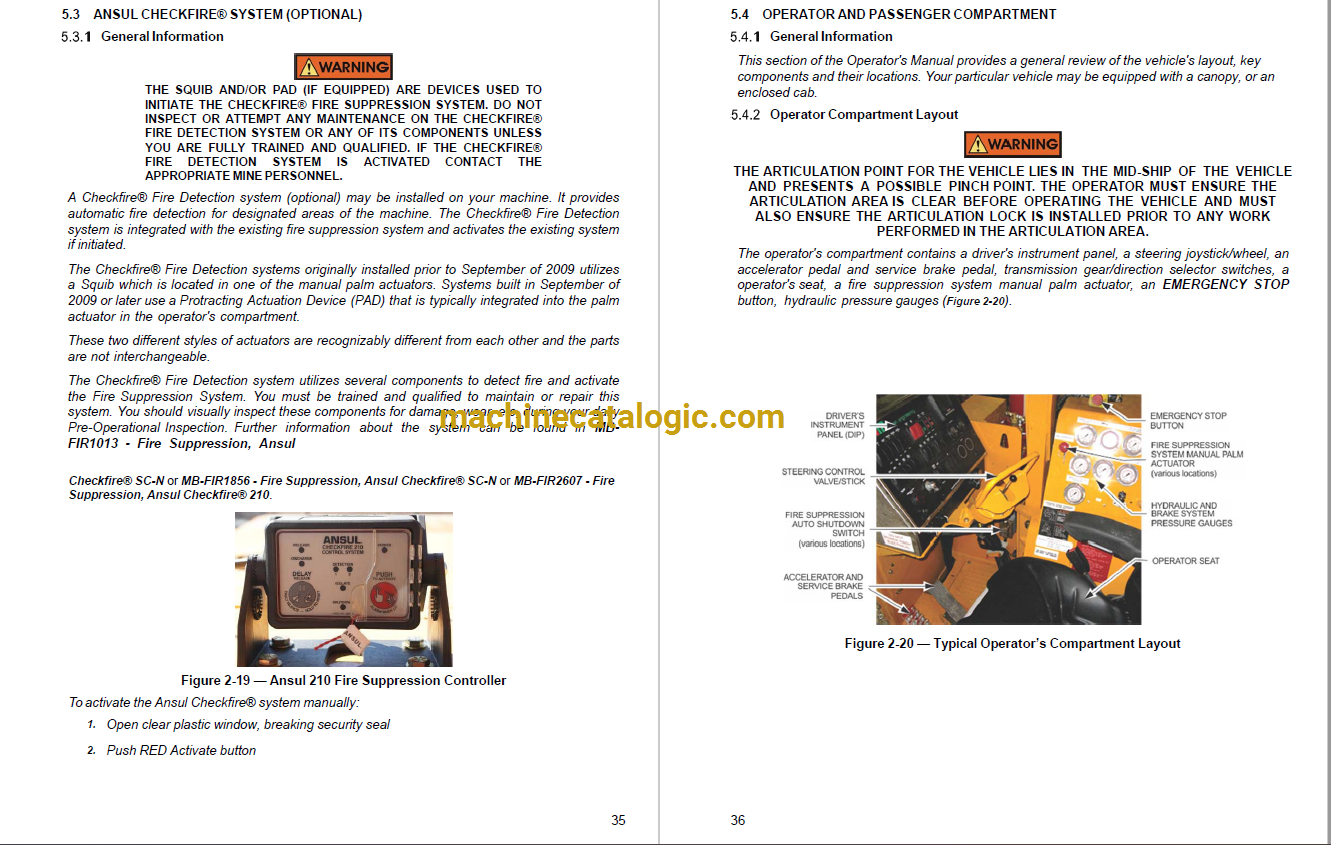
5.3 ANSUL CHECKFIRE® SYSTEM (OPTIONAL) ………………………………………………………. 35
5.3.1 General Information …………………………………………………………………………………….. 35
5.4 OPERATOR AND PASSENGER COMPARTMENT ……………………………………………….. 36
5.4.1 General Information …………………………………………………………………………………….. 36
5.4.2 Operator Compartment Layout ………………………………………………………………………. 36
5.4.3 Passenger Compartment ……………………………………………………………………………… 38
5.5 ENCLOSED CAB AND CONTROLS (OPTIONAL) …………………………………………………. 39
5.5.1 General Information …………………………………………………………………………………….. 39
5.5.2 Enclosed Cab Interior …………………………………………………………………………………… 40
5.5.3 120 VAC Receptacle (if equipped) …………………………………………………………………. 40
2.7.1 Enclosed Cab Controls (if equipped) ………………………………………………………………. 41
5.6 DRIVER’S INSTRUMENT PANEL AND CONTROLS ……………………………………………… 42
5.6.1 Driver’s Instrument Panel and Control Functions ……………………………………………… 42
5.7 HYDRAULIC PRESSURE GAUGES ……………………………………………………………………. 47
5.7.1 Hydraulic Pressure Gauges ………………………………………………………………………….. 47
5.8 RADIO REMOTE CONTROL SYSTEM ………………………………………………………………… 49
5.8.1 General Information …………………………………………………………………………………….. 49
OPERATION ………………………………………………………………………………………… 54
4
6.1 ENGINE STARTING PROCEDURE …………………………………………………………………….. 54
6.1.1 Starting the Engine ……………………………………………………………………………………… 54
6.2 DRIVING THE VEHICLE ……………………………………………………………………………………. 57
6.2.1 General Information …………………………………………………………………………………….. 57
6.3 BRAKE TEST PROCEDURE………………………………………………………………………………. 58
6.3.1 General Information …………………………………………………………………………………….. 58
6.3.2 Service Brake Test ………………………………………………………………………………………. 59
6.3.3 Emergency/Park Brake Test ………………………………………………………………………….. 59
6.4 PARKING AND SHUTDOWN ……………………………………………………………………………… 60
6.4.1 General Information …………………………………………………………………………………….. 60
6.5 LOCKING AND TAGGING VEHICLE OUT OF SERVICE ………………………………………… 61
6.5.1 General Information …………………………………………………………………………………….. 61
6.6 TOWING THE VEHICLE ……………………………………………………………………………………. 62
6.6.1 General Information …………………………………………………………………………………….. 62
6.7 TORQUE CONVERTER LOCK-UP ……………………………………………………………………… 63
6.7.1 General Rules for Operating Lock-Up …………………………………………………………….. 63
6.7.2 Types of Operation – When to Use Lock-Up …………………………………………………….. 63
6.7.3 Types of Operation – When Not to use Lock-Up ……………………………………………….. 64
6.7.4 Operating Techniques for Lock-Up …………………………………………………………………. 64
6.8 Boom and Platform General Operations ……………………………………………………………….. 66
6.8.1 Platform Hitch/Un-Hitch Procedure ………………………………………………………………… 66
SERVICING AND SPECIFICATIONS……………………………………………………….. 67
7.1 DAILY PRE-OPERATION INSPECTION ………………………………………………………………. 68
7.1.1 Daily Pre-Operation Maintenance ………………………………………………………………….. 68
7.1.2 Daily Pre-Operation Maintenance Checklist …………………………………………………….. 68
7.1.3 Daily Pre-Operation Inspection Procedures …………………………………………………….. 69
7.2 NORMAL OPERATING RANGES ………………………………………………………………………… 80
7.2.1 Normal Operating Ranges…………………………………………………………………………….. 80
7.3 RECOMMENDED LUBRICANTS AND FLUIDS …………………………………………………….. 81
7.3.1 Recommended Lubricants and Fluids Chart ……………………………………………………. 81
7.4 LUBRICATION CHART ……………………………………………………………………………………… 83
TRAINING ……………………………………………………………………………………………. 84
8.1 OPERATOR TRAINING TOPICS …………………………………………………………………………. 84
8.1.1 General ……………………………………………………………………………………………………… 84
8.1.2 OPERATOR TRAINING CHECKLIST …………………………………………………………….. 87
8.1.3 Operator Training Sign-Off Record …………………………………………………………………. 87
8.1.4 Previous Experience ……………………………………………………………………………………. 87
8.1.5 SRS Experience ………………………………………………………………………………………….. 87
8.2 OPERATOR TRAINING TEST …………………………………………………………………………….. 88
8.2.1 Safety Systems …………………………………………………………………………………………… 88