Format: PDF (Printable Document)
File Language: English
File Pages: 143
File Size: 19.73 MB (Speed Download Link)
Brand: Takeuchi
Model: TW60 Series 2 Wheel Loader
Book No: 8069521
Serial No: VER 2.1 REV 101221-
Type of Document: Operation and Maintenance Manual
$ 40
The TW60 is a compact wheel loader that spends its life in tight yards, construction sites, and material-handling work where it’s constantly starting, stopping, and cycling the loader gear. This Operation and Maintenance Manual helps you set a solid service rhythm so the machine stays predictable—no surprises when you’re loading trucks or cleaning up spoil. For example, if the steering starts to feel loose or the hydraulics get sluggish on a cold morning, this is the book you’d use to trace checks in order, verify basic adjustments, and decide what needs attention before it turns into downtime.
Applications & Use Cases
FAQ
Q: Can I use this manual on a tablet in the field?
A: Yes, it’s well suited to digital use; you can zoom diagrams and search terms quickly while standing next to the machine.
Q: Is it worth printing parts of this manual?
A: Many shops print the service intervals and checklists to hang by the time clock or keep in the service truck for quick reference.
Safety Note
Always follow the manual’s lockout, support, and parking procedures before working under or around raised components.
A. What you need to know to work safely with the
wheel loader ……………………………………………………………….5
1. Notes on this operating manual ………………………………………………. 5
1.1. Purpose of this operating manual ………………………………………………………………………….. 5
1.2. Storing the operating manual …………………………………………………………………………………. 5
1.3. Signal words and warning symbols ……………………………………………………………………….. 6
1.4. Further notes on this operating manual ……………………………………………………………….. 7
1.5. Manufacturer ……………………………………………………………………………………………………………… 7
2. Features of the wheel loader …………………………………………………… 8
2.1. Designation ………………………………………………………………………………………………………………… 8
2.2. Vehicle identifi cation number (VIN) ……………………………………………………………………….. 8
2.3. Variants ……………………………………………………………………………………………………………………….. 8
2.4. Technical specifi cations ……………………………………………………………………………………………. 9
2.4.1. Operating data…………………………………………………………………………………………………………… 9
2.4.2. Tires …………………………………………………………………………………………………………………………….10
2.4.3. Fill levels …………………………………………………………………………………………………………………….10
2.4.4. Diesel engine …………………………………………………………………………………………………………….10
2.4.5. Electrical system ……………………………………………………………………………………………………….10
2.5. Type plates ………………………………………………………………………………………………………………..11
2.5.1. Type plate wheel loader ………………………………………………………………………………………….11
2.5.2. Type plate cab …………………………………………………………………………………………………………..11
2.5.3. Type plate Diesel engine …………………………………………………………………………………………12
2.6. Vibrations …………………………………………………………………………………………………………………..13
2.6.1. Hand and arm vibration ………………………………………………………………………………………….13
2.6.2. Whole-body vibration ……………………………………………………………………………………………..13
2.7. Roll-over protection system (ROPS) ………………………………………………………………………14
2.8. Falling-object protective structures (FOPS) …………………………………………………………14
2.9. Warranty for add-ons and conversions …………………………………………………………………14
2.10. Approved ambient temperatures for the operation of the wheel loader ……….15
2.11. Dimensions ……………………………………………………………………………………………………………….16
2.12. Main components ……………………………………………………………………………………………………17
2.13. Operator’s station …………………………………………………………………………………………………….18
2.14. Control elements ……………………………………………………………………………………………………..19
2.15. Displays ……………………………………………………………………………………………………………………..20
2.15.1. Cockpit display system ……………………………………………………………………………………………20
2.15.2. Displays ……………………………………………………………………………………………………………………..20
2.16. Warning notices and labels …………………………………………………………………………………….23
2
3. Notes on using the wheel loader ……………………………………………. 25
3.1. Designated purpose ………………………………………………………………………………………………..25
3.2. Intended use ……………………………………………………………………………………………………………..25
3.3. Basic functionality ……………………………………………………………………………………………………25
3.3.1. Scope of application ………………………………………………………………………………………………..25
3.3.2. Structural design ………………………………………………………………………………………………………25
3.4. Your tasks and obligations ……………………………………………………………………………………..27
4. Safety information ……………………………………………………………….. 29
B. What you need to do to work safely with the wheel
loader ………………………………………………………………………. 33
5. Actions to take before starting to work ………………………………….. 33
5.1. Establishing a safe work zone ……………………………………………………………………………….33
5.2. Checking the wheel loader …………………………………………………………………………………….34
5.3. Refueling ……………………………………………………………………………………………………………………35
5.3.1. Diesel ………………………………………………………………………………………………………………………….35
5.4. Accessing and leaving the cab ……………………………………………………………………………….36
5.4.1. Accessing the cab …………………………………………………………………………………………………….36
5.4.2. Releasing and closing the door ……………………………………………………………………………..36
5.5. Opening and closing the window …………………………………………………………………………37
5.6. Adjusting the driver‘s seat ………………………………………………………………………………………38
5.6.1. Adjusting the seat to your weight …………………………………………………………………………38
5.6.2. Adjusting the height of the seat …………………………………………………………………………….38
5.6.3. Adjusting the longitudinal position ………………………………………………………………………39
5.6.4. Adjusting the inclination of the backrest ……………………………………………………………..39
5.6.5. Adjusting the height of the left armrest ……………………………………………………………….39
5.7. Fastening the safety belt …………………………………………………………………………………………40
5.8. Adjusting the exterior mirrors ………………………………………………………………………………..40
6. Driving the wheel loader ……………………………………………………….. 41
6.1. Safety information referring to driving …………………………………………………………………41
6.2. Starting ………………………………………………………………………………………………………………………41
6.2.1. Activating the battery main switch ……………………………………………………………………….41
6.2.2. Starting the Diesel engine ………………………………………………………………………………………42
6.2.3. Establishing the driving position for the loader and the attachment ……………..42
6.3. Driving ……………………………………………………………………………………………………………………….43
6.3.1. Forward motion ………………………………………………………………………………………………………..43
6.3.2. Reverse motion …………………………………………………………………………………………………………43
6.3.3. Setting the operating mode ………………………………………………………………………………….44
6.3.4. Changing direction ………………………………………………………………………………………………….45
6.3.5. Operation on slippery grounds ……………………………………………………………………………..46
6.3.6. Driving on slopes ……………………………………………………………………………………………………..47
6.4. Coping with line-of-sight (LOS) obstruction ……………………………………………………….48
6.4.1. Taking action against line-of-sight obstruction ………………………………………………….48
6.4.2. Giving hand signals ………………………………………………………………………………………………….49
6.5. Driving on public roads …………………………………………………………………………………………..50
6.5.1. Equipping the wheel loader for the operation on public roads ……………………….50
6.6. Lighting ……………………………………………………………………………………………………………………..51
6.6.1. Turning on the low-beam light ………………………………………………………………………………51
6.6.2. Turning on the high-beam light …………………………………………………………………………….51
6.6.3. Turning on the work lights ……………………………………………………………………………………..51
6.6.4. Turning on the rotating beacon (optional feature) ……………………………………………51
6.7. Heating and ventilating …………………………………………………………………………………………..52
6.7.1. Ventilating the interior …………………………………………………………………………………………….52
6.7.2. Heating the interior ………………………………………………………………………………………………….52
6.7.3. Drying the interior window panes ………………………………………………………………………..52
6.7.4. Cooling the interior of the cab ……………………………………………………………………………….53
6.8. Cleaning the windows …………………………………………………………………………………………….54
6.8.1. Cleaning the windshield …………………………………………………………………………………………54
6.8.2. Cleaning the rear window ………………………………………………………………………………………54
6.9. Warning ……………………………………………………………………………………………………………………..55
6.9.1. Activating the hazard warning lights ……………………………………………………………………55
6.9.2. Using the horn ………………………………………………………………………………………………………….55
6.9.3. Activating the headlamp fl asher ……………………………………………………………………………55
6.10. Stopping ……………………………………………………………………………………………………………………56
6.10.1. Stopping the forward motion ……………………………………………………………………………….. 56
6.10.2. Stopping the reverse motion …………………………………………………………………………………56
6.10.3. Turning off the Diesel engine …………………………………………………………………………………57
6.10.4. Parking and leaving the wheel loader…………………………………………………………………..57
7. Working with the wheel loader ………………………………………………. 58
7.1. Control elements for working ………………………………………………………………………………..58
7.1.1. Joystick ……………………………………………………………………………………………………………………..58
7.1.2. Switches on the control panel ………………………………………………………………………………. 58
7.2. Connecting attachments ………………………………………………………………………………………..59
7.2.1. Approved attachments ……………………………………………………………………………………………59
7.2.2. Operating conditions ………………………………………………………………………………………………59
7.2.3. Unlocking the HQC to connect attachments ………………………………………………………60
7.2.4. Connecting the attachment ………………………………………………………………………………….. 60
7.2.5. Locking the attachment ………………………………………………………………………………………….61
7.2.6. Putting down or changing an attachment …………………………………………………………..62
7.3. Changing from driving to working………………………………………………………………………..63
7.4. Using a bucket ………………………………………………………………………………………………………….64
7.4.1. Picking up material with the bucket ……………………………………………………………………..64
7.4.2. Transporting material in the bucket ……………………………………………………………………..64
7.4.3. Dumping material from the bucket ………………………………………………………………………65
7.5. Working with the pallet forks ………………………………………………………………………………… 66
7.5.1. Attaching the pallet forks ……………………………………………………………………………………….66
7.5.2. Picking up material with the pallet forks ……………………………………………………………..66
7.5.3. Transporting load on the pallet forks ……………………………………………………………………66
7.5.4. Unloading material from the pallet forks ……………………………………………………………..67
7.6. Working with hydraulically powered attachments or tools ………………………………68
7.6.1. Using the third section ……………………………………………………………………………………………68
7.7. Using a power sweeper …………………………………………………………………………………………..70
7.8. Driving at a low travel speed with a constant engine speed …………………………….71
7.9. Hand throttle control …………………………………………………………………………………………….72
4
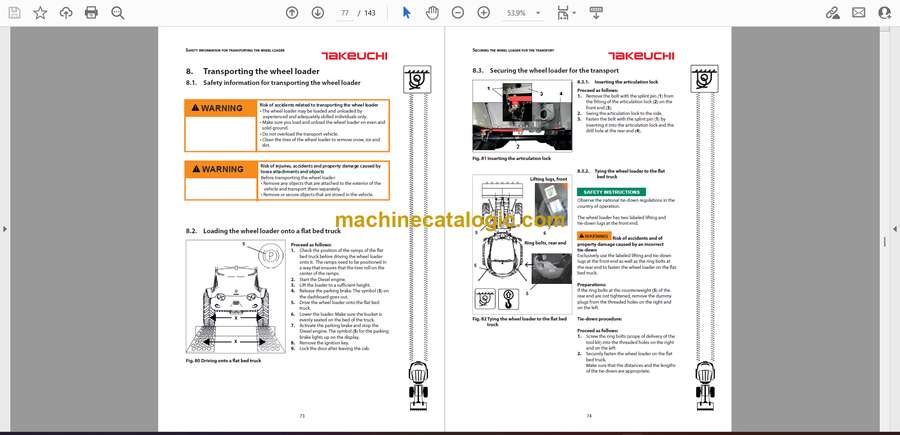
8. Transporting the wheel loader ………………………………………………. 73
8.1. Safety information for transporting the wheel loader ……………………………………….73
8.2. Loading the wheel loader onto a fl at bed truck ………………………………………………….73
8.3. Securing the wheel loader for the transport ……………………………………………………….74
8.3.1. Inserting the articulation lock ………………………………………………………………………………..74
8.3.2. Tying the wheel loader to the fl at bed truck ………………………………………………………..74
8.4. Transporting the wheel loader ………………………………………………………………………………75
8.4.1. Transporting the wheel loader with a crane ………………………………………………………..75
8.5. Recovering the wheel loader ………………………………………………………………………………….75
C. How to deal with malfunctions ……………………………………76
9. Failures and trouble shooting ………………………………………………… 76
9.1. Identifying and eliminating problems ………………………………………………………………….76
9.2. Diesel engine: Regeneration of the Diesel engine ……………………………………………..80
9.2.1. Initiating the regeneration process ……………………………………………………………………….80
9.2.2. Completing the regeneration process ………………………………………………………………….81
9.3. Emergency lowering of the loader in the event of a power loss ………………………82
10. Towing the wheel loader ……………………………………………………… 83
10.1. Safety information referring to towing ……………………………………………………………….83
10.2. What you need to do before towing the wheel loader ………………………………………84
10.2.1. Securing the wheel loader against rolling ……………………………………………………………84
10.2.2. Opening the HP valves ……………………………………………………………………………………………84
10.2.3. Deactivating the parking brake …………………………………………………………………………….. 84
10.3. What you need to do while towing the wheel loader ………………………………………..85
10.4. What you need to do after towing the wheel loader …………………………………………85
10.4.1. Closing the HP valves ………………………………………………………………………………………………85
10.4.2. Activating the parking brake ………………………………………………………………………………….85
11. Putting the wheel loader out of operation & fi nal shutdown … 86
11.1. Long term storage ……………………………………………………………………………………………………86
11.1.1. Putting the wheel loader out of operation…………………………………………………………..86
11.2. Final shutdown of the wheel loader ……………………………………………………………………..87
D. Figures ………………………………………………………………………88
E. Index …………………………………………………………………………90