$ 0
0
$ 0
0

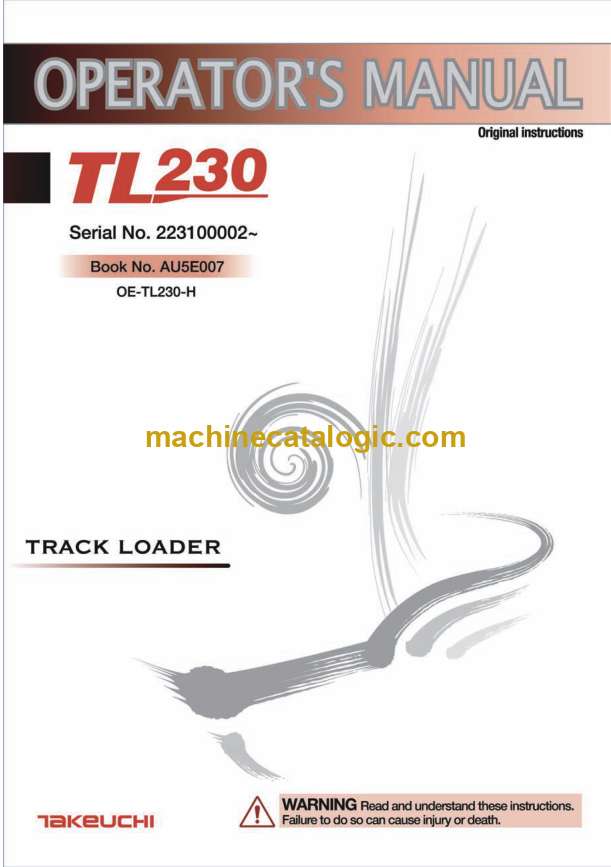
Takeuchi TL230 Track Loader Operators Manual (AU5E007)

Format: PDF (Printable Document)

File Language: English

File Pages: 209

File Size: 12.25 MB (Speed Download Link)

Brand: Takeuchi

Model: TL230 Track Loader

Book No: AU5E007

Serial No: 223100002-

Type of Document: Operators Manual

Categories: ,

$ 40

Share:

Takeuchi TL230 Track Loader Operators Manual (AU5E007)

Takeuchi TL230 Track Loader Operators Manual (AU5E007) (SN 223100002-)

On a TL230 track loader that lives on tight jobsites—backfilling, grading pads, loading trucks on uneven ground—this operators manual is what I lean on to run the machine smoothly and keep it out of the shop. It walks you through what each control actually does under load, how the machine should feel when it’s working right, and what to check when it starts acting “off.” For example, if the loader is nosing down on slopes or feels jumpy when you feather the controls, this is the book I’d use to verify operating procedures, check daily inspections, and correct bad habits before they turn into repairs.

Applications & Use Cases

  • Set up new operators so they understand travel, boom, and bucket controls before working near trenches or other trades.
  • Plan daily walk‑around checks to spot leaks, loose tracks, or damaged attachments before a shift.
  • Adjust operating technique for soft ground, tight access, or working close to structures to avoid track and undercarriage abuse.
  • Verify proper shutdown and parking on slopes to prevent roll‑away or restart issues.
  • Troubleshoot odd behavior like sluggish response or poor grading control by ruling out operator error first.

FAQ

Q: Can I keep this manual on a tablet in the cab?

A: Yes, it’s handy to have a digital copy you can zoom in on; just protect the device from dust and vibration.

Q: Is it worth printing parts of this manual?

A: I’d print the daily checks and control layouts, laminate them, and keep them in the site office or service truck for quick reference.

Safety Note

Always follow the manual’s procedures before working on slopes, near edges, or around ground personnel.

📘 Show Index

Takeuchi TL230 Track Loader Index:

  • Cover
  • Safety alert symbol
    • Signal words
    • Introduction
      • Foreword
      • Manual storage compartment
      • Serial numbers
    • Machine description
      • Front, rear, left and right
      • Designated operations
      • Features
      • Break-in period
    • Notes on reading this manual
  • Safety
    • General precautions
    • Precautions when preparing
    • Precautions when starting
    • Precautions when operating
    • Precautions when stopping
    • Precautions when transporting
    • Precautions on maintenance
    • Safety signs (decals)
  • Controls
    • Names of components
    • Covers
      • Ignition key
      • Fuel filler port
      • Engine hood
      • Rear door
    • Cab
      • Cab door
      • Side Window
      • Emergency exit
      • Fuse box
    • Lift arm stopper
    • Seat and seat belt
      • Seat
      • Seat belt
    • Instrument cluster
      • Warning lamps
      • Indicators
      • Meters
    • Multi-data display
      • LCD
    • Switches
      • Ignition switch
      • Engine shutdown switch
      • Horn button
      • Float button
      • Multifunction buttons
      • Auxiliary hydraulic switches
      • Travel speed button
      • Auxiliary low operation switch
      • Front wiper switch (optional) Rear wiper switch (optional)
      • Front light switch
      • Tail light switch
    • Levers and Pedal
      • Safety Bar
      • Throttle lever
      • Throttle pedal (optional)
      • Right control lever
      • Left control lever
    • Accessories
      • Air conditioner
      • External power socket (for EU)
      • Interior light (optional)
      • Mirrors
      • Radio (for cab)
      • Auxiliary hydraulic lines (optional)
      • High-Flow Hydraulic System (If equipped)
  • Operation
    • Before starting operation
      • Getting on or off the machine
      • Walk-around inspection
      • Daily inspection
    • Starting and stopping the engine
      • Before starting the engine
      • Starting the Engine
      • Warming up the engine
      • Stopping the engine
    • Operating the machine
      • Lever pattern
      • Warming up the machine (hydraulic oil)
      • Inspection after warm-up
      • Traveling the machine
      • Stopping travel
      • Operating the working equipment
    • Operating procedures
      • Prohibited operations
      • Cautions on operating
      • Cautions on traveling on slopes
      • Operations possible with this machine
    • Parking the machine
      • Parking
      • Inspection and checks after stopping the engine
    • Handling in cold climates
      • Preparing for cold climates
      • Cautions after operations
      • After the cold climate
    • Handling rubber tracks
      • Prohibitions
      • Cautions
      • Preventing the rubber tracks from coming off
  • Transport
    • Loading and unloading
    • Hoisting the machine
    • Securing the machine
  • Maintenance
    • General
      • Maintenance overview
      • Cautions on maintenance
    • Service data
      • Fuel and lubricant table
      • Regularly replace the hydraulic oil
      • List of consumables
      • List of tools
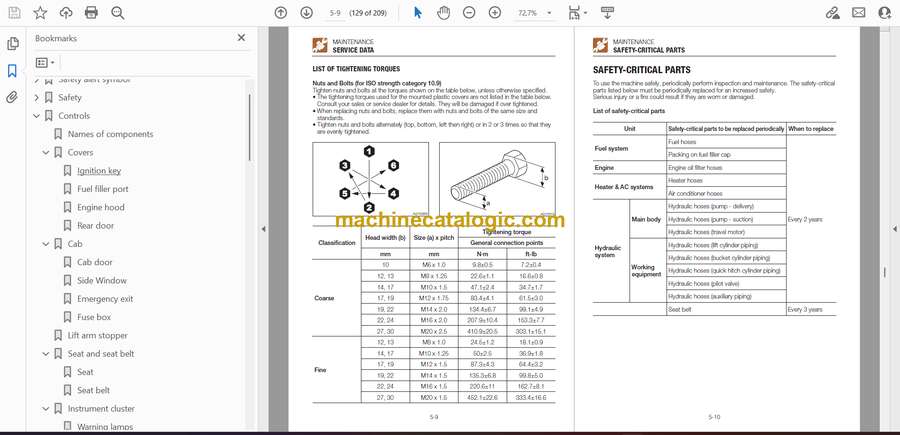
      • List of tightening torques
    • Safety-critical parts
    • Maintenance list
    • Walk-around inspection
      • Inspecting by opening the engine hood and rear door
      • Inspecting by walking around the machine
      • Inspecting while sitting in the operator’s seat
    • Daily inspection (every 10 hours)
      • Inspecting and replenishing the coolant
      • Inspecting and replenishing the engine oil
      • Inspecting the water separator
      • Inspecting the fuel level
      • Inspecting the hydraulic oil tank level and replenishing
      • Lubricating the working equipment
    • After the initial 50 hours (only for new machines)
      • Replacing the engine oil and the oil filter
      • Replacing the hydraulic oil return filter
      • Replacing the pilot line filter
      • Inspecting and adjusting the fan belt
      • Inspecting and adjusting the compressor belt (AC)
    • Every 50 hours
      • Inspecting and adjusting the track tension
      • Draining the water from the fuel tank
      • Inspecting the battery fluid level and replenishing
      • Inspecting the bucket stoppers (bolts/nuts)
    • Every 100 hours
      • Cleaning the water separator
    • After the initial 250 hours (only for new machines)
      • Replacing the travel motor gear oil
    • Every 250 hours
      • Replacing the engine oil and the oil filter
      • Inspecting and adjusting the fan belt
      • Inspecting and adjusting the compressor belt (AC)
      • Replacing the air cleaner element
      • Cleaning the radiator fins and oil cooler fins
      • Cleaning the condenser (AC)
      • Cleaning the air filters (AC)
      • Inspecting the refrigerant (gas) level (AC)
    • Every 500 hours
      • Replacing the hydraulic oil return filter
      • Replacing the pilot line filter
      • Replacing the travel motor gear oil
      • Replacing the fuel filter
      • Adjusting or replacing the bucket stoppers (bolts/nuts)
    • Every 1000 hours
      • Cleaning the engine cooling system
      • Replacing the hydraulic oil and cleaning the suction strainer
      • Inspecting and adjusting the engine valve clearance
    • Every 3000 hours
      • Inspecting and cleaning the engine fuel injectors
      • Inspecting the turbocharger (Wash blower as necessary)
    • When required
      • Replacing the bucket or attachment
      • Inspecting and replenishing the windshield washer fluid
      • Lubricating the levers
      • Inspecting the rubber tracks
    • Every year
      • Replacing the receiver dryer
    • Tilting up the canopy (cab)
    • Maintenance during extended storage period
  • Troubleshooting
    • Symptoms that are not malfunctions
    • If the engine overheats
    • If the battery goes dead
    • If a fuse blows
      • Inspecting and replacing the fuse
      • Inspecting the fusible link
    • Restarting after adding fuel
      • Bleeding air from the fuel system
    • Error code list
    • If a warning lamp flashes
    • Other symptoms
    • Lowering the lift arms to the ground
    • Towing
    • If the cab or canopy is damaged
  • Specifications
    • Basic Specifications
    • Machine dimensions
    • Operating ranges
  • Options
    • General precautions
      • Safety precautions
      • Cautions when installing attachments
      • Cautions when operating attachments
    • Hydraulic quick-hitch
      • Replacing the Bucket or Attachment
    • Quick-Couplers
    • Seat (with a switch function)
    • Optional equipment mass
  • California
  • EC-Conformity Certificate

Weidemann

Latest Product

0
    0
    Your Cart
    Your cart is emptyReturn to Shop