Develon 3A165 Diesel Industrial Engine Operation and Maintenance Manual (950106-144001EN)
This 3A165 Develon diesel usually ends up on pumps, generators, compressors—hard-running gear that sits in dust, mud, or a noisy plant and then has to fire right up when you need it. This operation and maintenance manual is about keeping that engine predictable: what to check every day, what to service by hours, and how to trace small issues before they turn into downtime. Picture harvest week or a night shift: you hit the starter, it cranks slow, blows a bit of smoke, and sounds off. With this manual, you can systematically check fuel, air, cooling, and starting circuits instead of just throwing parts at it.
Applications & Use Cases
- Set up a daily walk-around so you trace leaks, inspect belts and hoses, and verify fluid levels before the engine ever warms up.
- Plan your service intervals so you don’t skip filters, valve checks, or coolant changes and then wonder why it’s hard to start under load.
- Use the troubleshooting flow to isolate whether a no-start is fuel, air, or electrical, then test each section in order.
- Follow the proper sequence to bleed the fuel system after filter changes so you don’t cook the starter trying to clear air.
- Align your seasonal layup and restart routine: route storage steps, then check and test everything before peak season hits.
FAQ
Q: Is this a PDF I can search on a laptop or phone?
A: Yes, it’s typically a searchable PDF, so you can jump straight to the section you need instead of scrolling forever.
Q: Can I print just a few pages to keep at the machine?
A: You usually can; most folks print the service schedule and key procedures, slide them in plastic sleeves, and keep them right at the jobsite.
Safety Note
Always let the engine cool and relieve any built-up pressure before you crack open cooling or fuel lines to inspect, bleed, or replace parts.
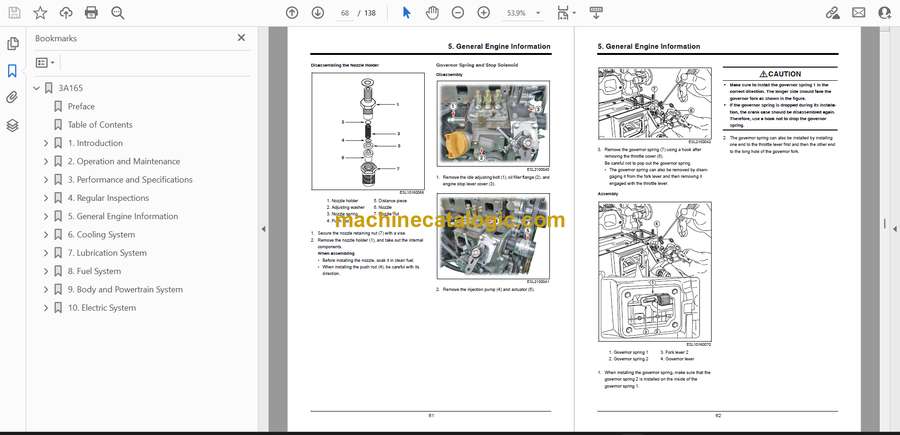
Develon 3A165 Diesel Industrial Engine Index:
- 3A165
- Preface
- Table of Contents
- 1. Introduction
- General Information
- Danger, Warning, Caution, and Notes
- General Information
- General Precautions
- Cautions for Starting the Engine
- Cautions for Inspections and Maintenance
- General Service Information
- Other Safety Instructions and Environmental Pollution
- Use of Genuine Parts
- Engine Care
- Preventing Damage and Wear
- Preventing Pollution
- Handling Engine Oil
- 2. Operation and Maintenance
- Starting and Stopping the Engine
- Preparing to Start
- When Starting the Engine
- Immediately After Starting the Engine
- During Operation
- When Stopping
- Engine Break-In
- General Information
- Breaking In New Engines
- Inspection Items
- Operation After Break-in Period
- Inspection After Starting the Engine
- Engine Oil Pressure
- Coolant Temperature
- Running the Engine in Winter
- Cold Start
- Prevention of Coolant Freezing
- Preventing Engine Overcooling
- Engine Oil
- Engine Inspections and Maintenance
- Checking Engine Parts After Prolonged Operation
- Turbocharger Inspections and Maintenance
- Intake System
- Exhaust System
- Lubrication System
- Inspection During Operation
- Coolant
- Oil Pressure Warning Lamp
- Fuel
- Exhaust Gas Color
- Stop the Engine Immediately Under the Following Conditions:
- Engine Backlash and Countermeasures
- 3. Performance and Specifications
- Engine Specifications
- Performance Curve
- Outside Drawing and Dimensions of the Engine
- Outside Drawing of the Engine
- TIER-4
- STAGE-V
- Engine Dimensions
- 4. Regular Inspections
- General Information
- General Information
- Daily Inspections
- Maintenance Schedule
- Radiator (optional)
- Checking, Adding and Changing Coolant
- Replacing Coolant
- Inspection for Excessive Coolant Overflow
- Checking the Radiator Hose (Water Pipe)
- Cleaning the Radiator Core
- Precaution for Overheating
- Cleaning the Radiator
- Anti-freeze
- Air Cleaner (optional)
- Battery (optional)
- Long-term Storage
- Fan Belt
- Tension and Wear of Fan Belt
- Adjusting Tension
- Long-term Storage
- 5. General Engine Information
- General Tightening Torque
- General use Screws, Bolts and Nuts
- Tightening Torque for Engine Parts
- Unit Conversion Table
- Servicing Specifications
- Engine Body
- Lubrication System
- Cooling System
- Fuel System
- Inspection and Adjustment
- 3A165 Engine
- Measuring the Oil Pressure
- Checking the Injection Nozzle
- Disassembly and Assembly
- 3A165 Engine
- Measuring the Piston Ring
- Major Troubleshooting Table
- When it is Hard to Start the Engine
- When the Engine Stalls
- When the Power is Insufficient
- When Color of the Exhaust Gas is Especially Bad
- When the Engine Should be Stopped Immediately
- When the Engine is Over-heated
- 6. Cooling System
- Coolant Flow Route
- Water Pump
- Thermostat
- Radiator
- Radiator Cap
- 7. Lubrication System
- Engine Oil Flow Chart
- Description of Lubricating System Functions
- 8. Fuel System
- Fuel System
- Fuel Flow Route
- Fuel Filter
- Bleeding the Fuel System
- Fuel Feed Pump
- Injection Pump
- Injection Nozzle
- Governor and Stop System
- Basic Principle of the Governor System
- Operating Principle of the Governor
- PCV Valve
- ECUs and Sensors
- ECU (Electronic Control Unit)
- 9. Body and Powertrain System
- Cylinder Head
- Cylinder Block
- MLS Cylinder Head Gasket
- Honing the Cylinder
- Crankshaft
- Piston and Piston Rings
- Connecting Rod
- Camshaft
- Fuel Camshaft
- Rocker Arm Assembly
- Intake and Exhaust Valve
- Timing Gear
- Flywheel
- 10. Electric System
- Specifications (APECS 4800)
- Component Characteristics
- Component Specifications
- Pin Description (APECS 4800)
- Description for the Connectors and Pins
- Power Supply Input
- Discrete Input: D12 (Key ST Signal)
- Troubleshooting
- Fault Code Flash Timing
- Fault Codes and Description
- Sensors
- Actuator (Position Sensor) (2)
- Atmospheric Pressure Sensor (4)
- Engine Control System
Develon