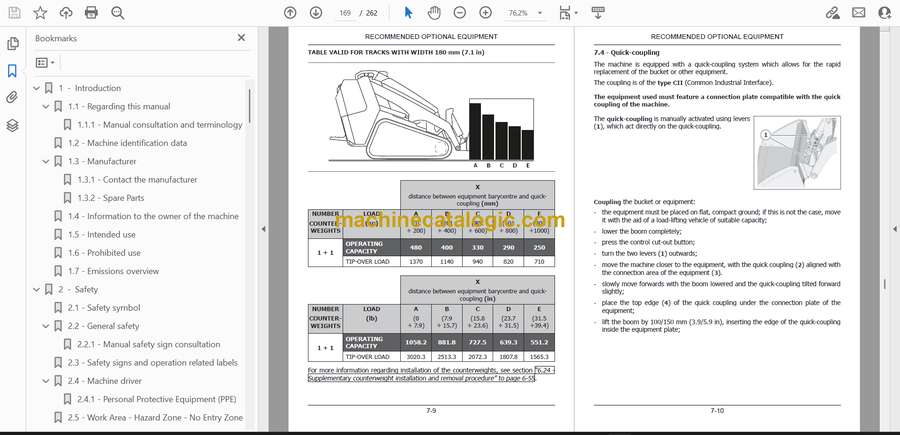
Case C314 Mini Excavator Operators Manual (92756971, B280201089) (October 2025)
This Case C314 mini excavator usually lives on construction sites, farm yards, utility trenches—anywhere you’re digging, lifting, or working in tight spots. This operators manual helps you run the machine the way it was meant to be run: how the controls actually respond, what to check before you swing over a trench, and how to shut it down without cooking anything. Say you’re tracking across a wet slope with a loaded bucket—this manual walks you through how the machine should feel, which controls to feather, and what to do if it starts to bog or slide.
Applications & Use Cases
- Trace daily walk‑around checks so you spot loose tracks, leaking hoses, or cracked buckets before something fails under load.
- Check and verify control patterns, travel direction, and swing behavior so you don’t get turned around when you’re tight against a wall or foundation.
- Isolate odd noises or slow hydraulics by following the basic operator‑level tests before you call a tech.
- Bleed off hydraulic pressure safely before you disconnect a quick coupler or move attachments around the yard.
- Inspect and route your work: planning dig depth, spoil placement, and machine position so you’re not constantly re‑tracking and wasting time.
FAQ
Q: Is this a PDF I can search on my laptop or phone?
A: It’s typically a searchable PDF, so you can jump right to sections like controls or maintenance using the search bar.
Q: Can I print just the pages I need for the jobsite?
A: Yeah, most folks print the safety, controls, and daily check pages, slip them in plastic sleeves, and leave the full file on a computer or tablet.
Safety Note
Always drop the attachment to the ground, kill the engine, and cycle the controls to bleed pressure before you put your hands near any pins, hoses, or couplers.
Case C314 Mini Excavator Index:
- 1 - Introduction
- 1.1 – Regarding this manual
- 1.1.1 – Manual consultation and terminology
- 1.2 – Machine identification data
- 1.3 – Manufacturer
- 1.3.1 – Contact the manufacturer
- 1.3.2 – Spare Parts
- 1.4 – Information to the owner of the machine
- 1.5 – Intended use
- 1.6 – Prohibited use
- 1.7 – Emissions overview
- 2 - Safety
- 2.1 – Safety symbol
- 2.2 – General safety
- 2.2.1 – Manual safety sign consultation
- 2.3 – Safety signs and operation related labels
- 2.4 – Machine driver
- 2.4.1 – Personal Protective Equipment (PPE)
- 2.5 – Work Area – Hazard Zone – No Entry Zone
- 2.6 – List of Residual Risks
- 2.7 – Safety procedures
- 2.8 – Safety devices
- 2.8.1 – Control cut-out button
- 2.8.2 – Parking brake button
- 3 - Technical data
- 3.1 – General data
- 3.2 – Engine
- 3.3 – Hydraulic system
- 3.4 – Performance
- 3.5 – Counterweight
- 3.6 – Undercarriage
- 3.7 – Fluid capacities
- 3.8 – Electrical system
- 3.9 – Brakes
- 3.10 – Operating load
- 3.10.1 – Bucket
- 3.10.2 – Pallet forks
- 3.11 – Overall dimensions
- 4 - Transporting the machine
- 4.1 – Transportation dimensions
- 4.2 – Loading/unloading operations
- 4.3 – Securing the machine on the mean of transport
- 4.4 – Lifting the machine
- 4.4.1 – Lifting procedure
- 4.5 – Recovering and pulling the machine
- 5 - Controls and instrumentation
- 5.1 – Description of controls
- 5.2 – Description of control levers
- 5.3 – Description of dashboard
- 5.4 – Roller operation
- 5.5 – Auxiliary power socket on console
- 5.6 – Control panel
- 5.7 – Battery isolator switch
- 5.8 – Geo-localisation system
- 6 - Using the machine
- 6.1 – Commissioning
- 6.2 – Battery isolator switch
- 6.3 – Driver seat
- 6.4 – Control cut-out button
- 6.5 – Parking brake button
- 6.6 – Visibility
- 6.7 – Starting the engine
- 6.7.1 – Inspections prior to starting
- 6.7.2 – Procedure for starting the machine
- 6.8 – Engine jump-starting procedure
- 6.8.1 – Connecting the additional cables
- 6.8.2 – Starting the engine
- 6.8.3 – Removing the additional cables
- 6.9 – Horn
- 6.10 – Work lights
- 6.11 – Operation at low temperatures or during winter
- 6.12 – Precautions during operation
- 6.13 – Stopping and parking the machine
- 6.14 – Refuelling
- 6.15 – Throttle lever
- 6.16 – Machine movement
- 6.16.1 – Left Joystick
- 6.16.2 – Forward and reverse travel
- 6.16.3 – Turning while moving forward
- 6.16.4 – Rotation while reversing
- 6.16.4.1 – Precautions during the operation of the tracks
- 6.17 – Operating the boom
- 6.17.1 – Right joystick
- 6.17.2 – Boom floating control
- 6.18 – Using the bucket
- 6.19 – Discharge residual pressure in the hydraulic system
- 6.20 – Auxiliary hydraulic systems
- 6.20.1 – Connection of equipment to the hydraulic systems
- 6.20.2 – AUX1 Auxiliary hydraulic system
- 6.20.2.1 – AUX1 hydraulic system three-way switch
- 6.20.2.2 – Single-acting mode AUX1
- 6.20.2.3 – Double-acting mode AUX1
- 6.20.2.4 – Auxiliary hydraulic system AUX1 latch with operator not in the driver’s seat
- 6.20.3 – Drain line (direct to tank – optional)
- 6.21 – Electrical auxiliary systems (optional)
- 6.21.1 – Connecting equipment to electrical systems
- 6.21.2 – Operation of electrical auxiliary systems
- 6.22 – Emergency boom lowering procedure
- 6.23 – Procedure for the temporary activation of the controls with the operator not detected in the driver’s seat
- 6.24 – Supplementary counterweight installation and removal procedure
- 6.25 – Daily storage
- 7 - Recommended optional equipment
- 7.1 – Safety precautions
- 7.2 – Specifications on authorised equipment
- 7.3 – Operating capacity
- 7.4 – Quick-coupling
- 7.5 – Precautions
- 8 - Maintenance
- 8.1 – Safety
- 8.1.1 – Putting the machine out of service for maintenance
- 8.2 – Tools and equipment for maintenance
- 8.3 – Safety devices
- 8.3.1 – Engine hood
- 8.3.2 – Electrical components guard
- 8.3.3 – Upper compartment cover (cushion)
- 8.3.4 – Lower compartment cover
- 8.3.5 – Oil tank compartment guard
- 8.4 – Locking the boom for maintenance
- 8.5 – Electrical system
- 8.6 – Tracks
- 8.7 – Refilling
- 8.7.1 – Refilling quantity table
- 8.7.2 – Products for lubrication
- 8.7.3 – Fuel
- 8.7.4 – Engine oil
- 8.7.5 – Cooling liquid
- 8.7.6 – Hydraulic system oils
- 8.7.6.1 – Requirements for using eco-friendly hydraulic oil
- 8.7.6.2 – Scheduled plan for analysis and control of ecological hydraulic oil
- 8.7.6.3 – Requirements for the sampling of eco-friendly hydraulic oil
- 8.8 – Battery
- 8.8.1 – Fitting and removing the battery
- 8.8.2 – Recharging the battery
- 8.9 – Tightening torque tables
- 8.10 – Weights of the material in a pile
- 8.11 – Regular maintenance
- 8.11.1 – Performance check
- 8.11.2 – Check of engine oil level
- 8.11.3 – Replacement of engine oil
- 8.11.4 – Replacement of engine oil filter
- 8.11.5 – Check of cooling liquid level
- 8.11.6 – Replacement of cooling liquid
- 8.11.7 – Check and replacement of cooling liquid sleeves
- 8.11.8 – Cleaning the radiator
- 8.11.9 – Check of hydraulic oil level
- 8.11.10 – Change discharge circuit hydraulic oil filter
- 8.11.11 – Hydraulic system oil sampling/replacement
- 8.11.12 – Replacement of intake circuit hydraulic oil filter
- 8.11.13 – Check of hydraulic line condition
- 8.11.14 – Checking that the screws of the undercarriage are tight
- 8.11.15 – Check of track tension
- 8.11.16 – Adjusting the track tension
- 8.11.17 – Checking tension and replacing alternator belt
- 8.11.18 – Checking tension and replacing fan belt
- 8.11.19 – Check and replacement of air filter
- 8.11.20 – Replacement of fuel filter
- 8.11.21 – Draining the fuel tank
- 8.11.22 – Draining fuel circuit water and replacing water separator filter
- 8.11.23 – Cleaning the filter on the fuel intake
- 8.11.24 – Bleeding air from the fuel circuit
- 8.11.25 – Replacement of travel engine oil
- 8.12 – Lubrication of pins
- 8.13 – Long inactivity periods
- 8.14 – Dismantling the machine
- 9 - electrical components
- 9.1 – Fuses and relays
- 9.1.1 – Control box fuses
- 9.1.2 – Control unit relays
- 9.1.3 – Engine fuses and relays
- 9.2 – Work lights replacement
- 9.3 – LED strip replacement
CNH