Develon DX210WA MH Material Handler Operation and Maintenance Manual (950106-03792A-EN)
Out on scrap yards, transfer stations, or log yards, this DX210WA material handler lives in dust, mud, and long hours. This manual helps you set a maintenance rhythm so the machine starts, swings, and lifts the way you expect, instead of surprising you when you’re slammed. Say you’re heading into a busy week loading trucks; with the schedule in here, you’ll know what to trace, check, and bleed on Sunday so you’re not chasing a hydraulic leak on Wednesday.
Applications & Use Cases
- Set up daily walk‑around checks so you trace leaks, inspect tires, and verify boom functions before the operator even climbs in.
- Plan weekly and monthly services so you isolate wear points, route grease properly, and don’t wait until pins are already knocking.
- Use the troubleshooting steps to test and align controls when the swing feels jerky or the grab won’t hold like it used to.
- Follow the hydraulic and cooling care routines to check levels, bleed air when needed, and keep the machine from overheating mid‑shift.
- Reference adjustment procedures to verify safety systems and limiters are working before you’re lifting over trucks or railcars.
FAQ
Q: Is this a PDF I can search on my laptop or phone?
A: Yes, it’s typically a searchable PDF, so you can jump straight to what you need by keyword.
Q: Can I print just the pages I need for the shop?
A: You usually can; most folks print the service intervals and lubrication charts and keep them by the bench.
Safety Note
Always support and lock out any raised attachment before you inspect, test, or bleed systems under the boom.
Develon DX210WA MH Material Handler Index:
- DX210WA MH Material Handler
- Table of Contents
- Introduction
- The Intended Use
- Manual Appendix
- Safety
- Operation Cautions
- Hazard Operation
- Be careful with operating elevating cabin or front attachment.
- Be careful object or person when elevating cabin descends.
- Safety Mirror – Elevating Cabin
- Only drive the machine in a state of Elevating Cabin down and outrigger up.
- Do not work or drive on slopes.
- To secure more stability, we recommend the outrigger down when work.
- Operation Caution Decals
- 1. Material Handler Operation
- 2. Cabin Lower Mirror
- 3. Aviod Crash from Front Attachment
- 4. Grease Injection Boom
- 5. Grease Injection Arm
- 6. Grease Injection SCE25-CE
- 7. Interval for Greasing
- 8. Safety Pin for Inspection
- 9. Oil Level Check
- 10. Emergency Lowering Cabin
- 11. Elevating Cabin Sticker
- 12.
- 13.
- 14.
- 15.
- Emergency Lowering of Elevating Cabin
- Emergency Cabin Lowering: Inside the Operator Station
- Emergency Cabin Lowering: From The Outside
- Safety Pin
- Specification
- The Names of Each Part
- Specification
- Working Range
- Gooseneck Arm with Single Arm Cylinder Type
- Gooseneck Arm with Dual Arm Cylinder Type
- Component Weight & Dimension
- Component Weight
- Gooseneck Arm with Single Arm Cylinder Type
- Gooseneck Arm with Dual Arm Cylinder Type
- Dimension
- Gooseneck Arm with Single Arm Cylinder Type
- Gooseneck Arm with Dual Arm Cylinder Type
- Solid Tire (Optional)
- SAE Lift Capacities
- Circuit Diagram
- Hydraulic Parts Installation
- Electric Parts Installation
- Operation
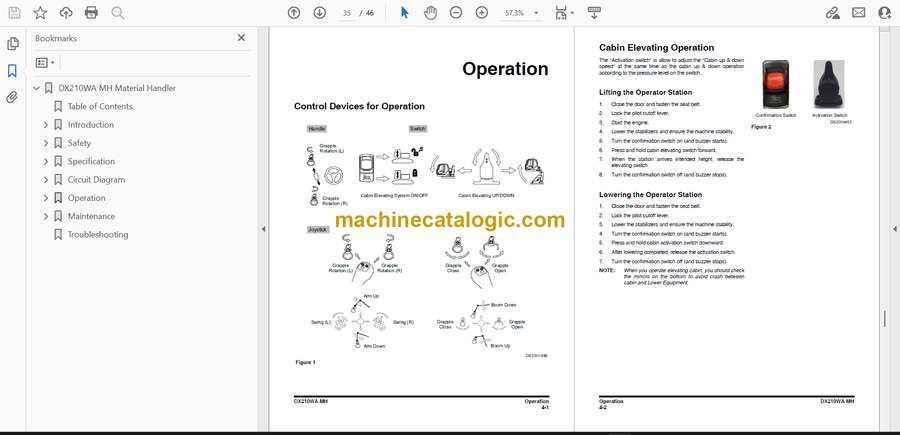
- Control Devices for Operation
- Cabin Elevating Operation
- Lifting the Operator Station
- Lowering the Operator Station
- Alarm of Confirmation Switch
- Wheel Equipment
- Maintenance
- Greasing
- 50 Hour / Weekly Service
- Perform All 10 Hour / Daily Service Checks
- Grease Boom, Arm and Front Attachment Pins
- Hydraulic Oil Level Check
- Posture for Hydraulic System Oil Level Check
- Troubleshooting
Develon