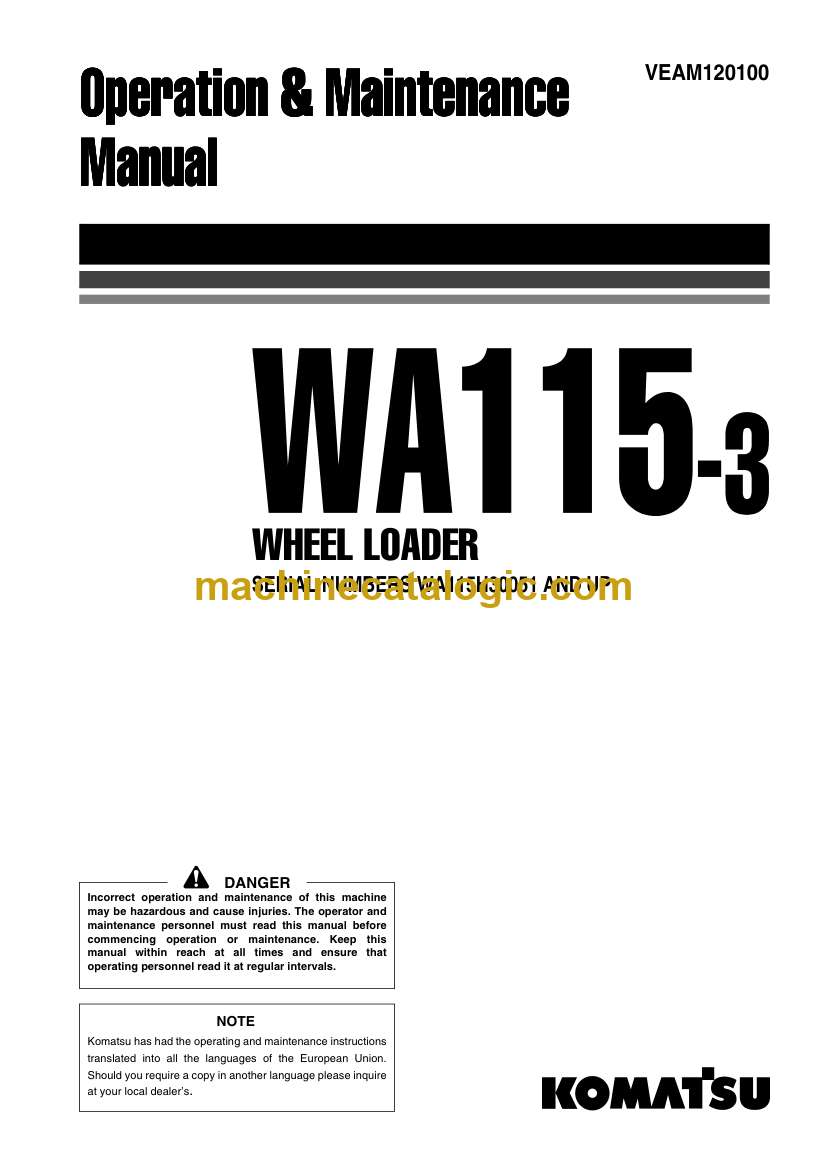
Komatsu WA115-3 Wheel Loader Operation and Maintenance Manual (VEAM120100)
On a WA115-3 working in yards, roadwork, or light quarry duty, this Operation and Maintenance Manual is what I lean on to keep the loader reliable day in, day out. It walks you through how to run the machine without abusing it, then lays out a sensible rhythm for checks and services. If, for example, the loader starts feeling sluggish on repeated bucket cycles, this is the book I’d use to verify basic operation steps, trace likely maintenance items, and rule out simple issues before calling in deeper diagnostics.
Applications & Use Cases
- Set up a daily/weekly inspection routine so you catch loose hardware, leaks, or play in the joints before something fails on shift.
- Plan preventive maintenance around your actual workload to minimize downtime and bunching of services.
- Verify correct operating practices for loading, travel, and parking to reduce stress on driveline and hydraulics.
- Trace early wear signs—unusual noises, heat, or sluggish response—back to likely service points.
- Guide new operators on basic care so the machine isn’t abused between scheduled services.
FAQ
Q: Can I keep a digital copy on a tablet in the cab?
A: Yes, it’s practical to use digitally; you can zoom diagrams and search quickly while you’re at the machine.
Q: Is it worth printing sections of this manual?
A: Many techs print the inspection and service pages they use most and keep them in a binder or toolbox for greasy-hands work.
Safety Note
Always follow the manual’s safety instructions and lockout procedures before inspecting, adjusting, or servicing the loader.
📘 Show Index
Komatsu WA115-3 Wheel Loader Index:
- WA115gb_VEAM120100_Inhalt.pdf
- 1.� Introduction
- 1.1.� Foreword
- 1.2.� Safety information
- 1.3.� Introduction
- 1.4.� Location of plates
- 1.5.� Table of contents
- 1.6.� Dimensions, weights and operating data
- 1.7.� CE-conforming equipment
- 1.8.� Loading and securing
- 2.� Safety
- 2.1.� General safety measures
- 2.2.� Safety precautions during operation
- 2.3.� Safety measures during transport
- 2.4.� Precautions for maintenance
- 2.5.� Labels on the machine
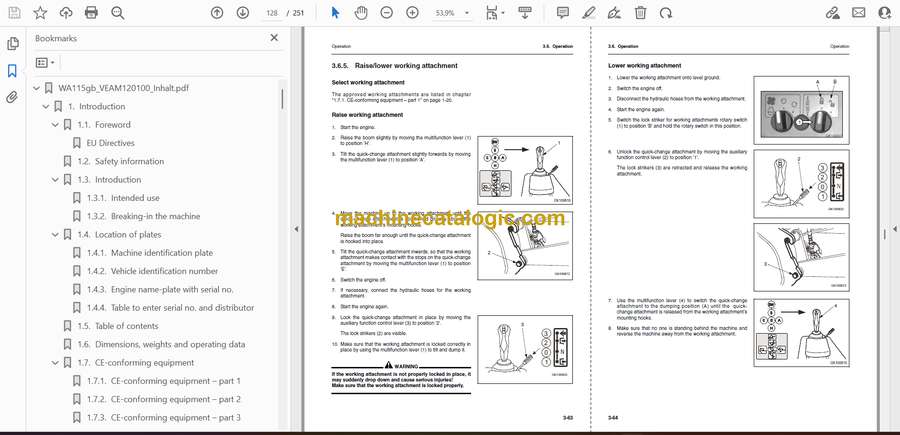
- 3.� Operation
- 3.1.� General view
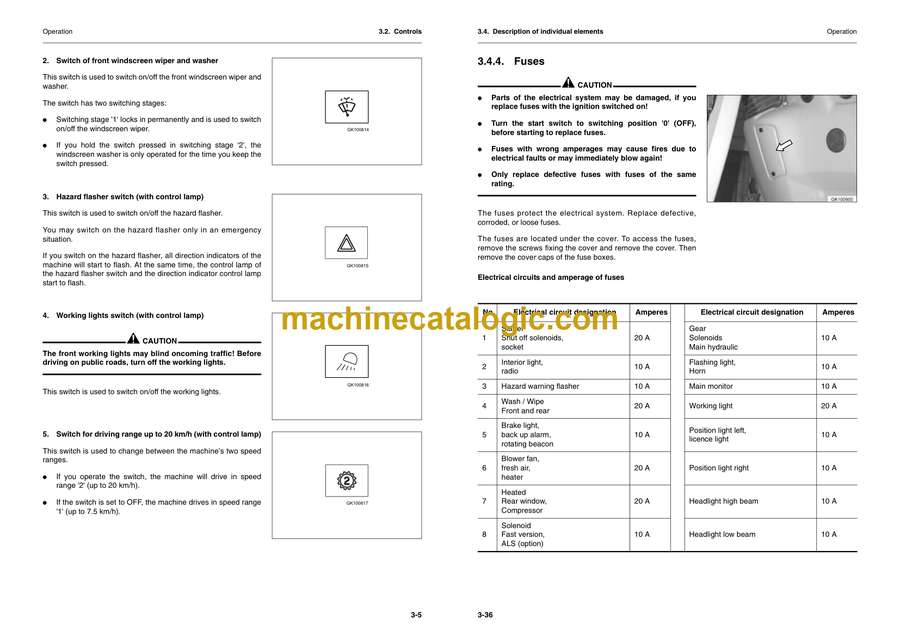
- 3.2.� Controls
- 3.3.� Control lamps, measuring indicators und warning lights
- 3.4.� Description of individual elements
- 3.5.� Checks and adjustments prior to starting work
- 3.6.� Operation
- 3.7.� Transport
- 3.8.� Cold weather operation
- 3.9.� Long-term storage
- 4.� Troubleshooting
- 4.1.� When the machine runs out of fuel
- 4.2.� Towing the machine
- 4.3.� If battery is discharged
- 4.4.� For insufficient braking effect
- 4.5.� Emergency steering properties
- 4.6.� Emergency lowering
- 4.7.� Other troubles
- 5.� Maintenance
- 5.1.� Maintenance guide
- 5.2.� Maintenance basics
- 5.3.� Wearing parts list
- 5.4.� Lubricants, fuels and filling capacities
- 5.5.� Tools and standard tightening torques (bolts,�nuts)
- 5.6.� Periodical replacement of safety-critical parts
- 5.7.� Maintenance schedule chart
- 5.8.� Service procedure
- 6.� Technical data
- 6.1.� Technical data
- 6.2.� Noise emission levels
- 6.3.� Vibration level
- 6.4.� Limit values for slopes
- 7.� Special equipment and attachments
- 7.1.� ALS-electronics
- 7.2.� Air condition
- 8.� Index
Link Belt