$ 0
0
$ 0
0

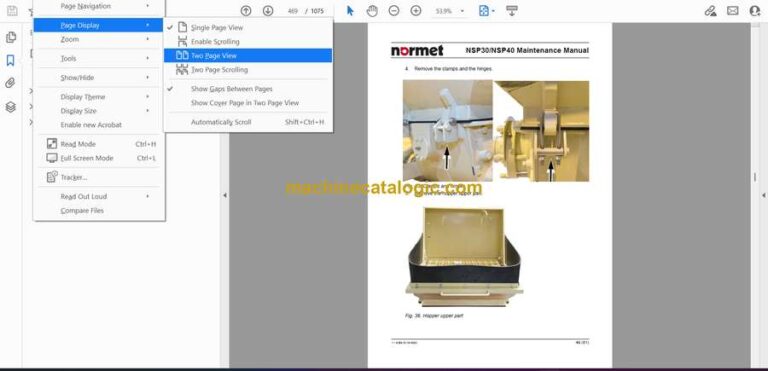
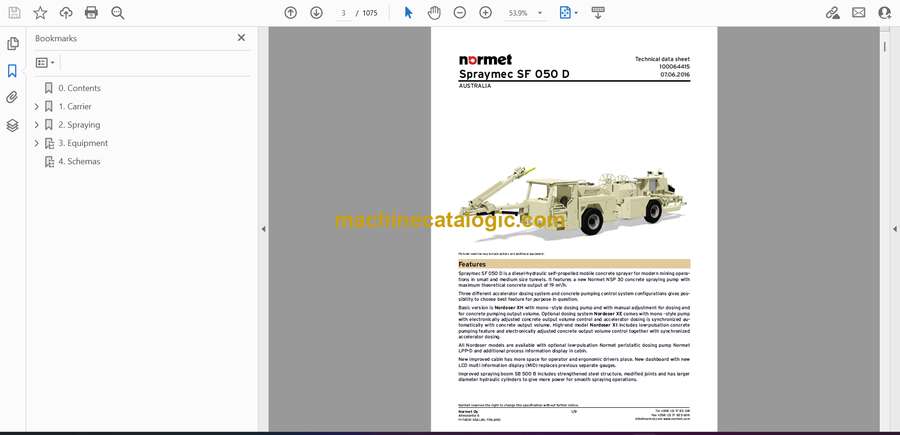
Normet Spraymec SF050 D Technical Information (5F8C6CE_1000)

Format: PDF (Printable Document)

File Language: English

File Pages: 1075

File Size: 60.79 MB (Speed Download Link)

Brand: Normet

Model: Spraymec SF050 D

Book No: 5F8C6CE_1000

Type of Document: Technical Information

Categories: ,

$ 55

Share:

Normet Spraymec SF050 D Technical Information (5F8C6CE_1000)

Normet Spraymec SF050 D Technical Information (5F8C6CE_1000)

📘 Show Index

Normet Spraymec SF050 D Technical Information (5F8C6CE_1000) Index:

  • 0. Contents
  • 1. Carrier
    • 0. Carrier
    • 1. Technical information
    • 2. Operator’s Manual
      • Spraymec SF 050 D
      • Contents
      • 1. Introduction
        • 1.1. Carrier
        • 1.2. Carrier identification
        • 1.3. Frame structure
          • 1.3.1. Engine end frame
          • 1.3.2. Load end frame
          • 1.3.3. Oscillation
        • 1.4. Engine
          • 1.4.1. General
          • 1.4.2. Exhaust system
        • 1.5. Hydrodynamic transmission
          • 1.5.1. General
          • 1.5.2. Torque converter
          • 1.5.3. Transmission
          • 1.5.4. Transmission controls
        • 1.6. Mechanical transmission
          • 1.6.1. General
          • 1.6.2. Driveshafts
          • 1.6.3. Axle assemblies
        • 1.7. Hydraulics
          • 1.7.1. Pumps
          • 1.7.2. Brakes
          • 1.7.3. Steering
      • 2. Safety rules
        • 2.1. General safety rules
        • 2.2. Operating safety rules
        • 2.3. Label locations
      • 3. Operator controls
        • 3.1. Dashboard
          • 3.1.1. TB7
          • 3.1.2. TB7b
          • 3.1.3. Norsmart control system.
          • 3.1.4. Automatic Brake Application system
          • 3.1.5. Engine control system
        • 3.2. Remote control box
        • 3.3. Radio remote control box
        • 3.4. CDC console (optional)
        • 3.5. TB5
        • 3.6. Main switch
          • 3.6.1. Service switch
          • 3.6.2. Starter isolator
        • 3.7. Circuit breakers
        • 3.8. Driving controls
        • 3.9. Seat
        • 3.10. Emergency stop
        • 3.11. Pressure gauge kit (optional)
        • 3.12. Specific features
      • 4. Operation and use
        • 4.1. Commissioning on delivery
        • 4.2. Daily operation
          • 4.2.1. Daily maintenance operations
          • 4.2.2. Instrumentation checks
          • 4.2.3. Testing the brakes
        • 4.3. Driving the carrier
          • 4.3.1. General
          • 4.3.2. Before start
          • 4.3.3. Engine Start
          • 4.3.4. Gear shifting
          • 4.3.5. Steering
          • 4.3.6. Setting the carrier in motion
          • 4.3.7. Driving on slopes
          • 4.3.8. Road driving
          • 4.3.9. Stopping
        • 4.4. Towing
          • 4.4.1. General
          • 4.4.2. Preparations for towing
          • 4.4.3. Towing when engine/pump is not functioning
          • 4.4.4. Towing when engine/pump combination is working
          • 4.4.5. Measures after towing
          • 4.4.6. Disconnecting the steering cylinder
          • 4.4.7. Disconnecting the cardan shafts
          • 4.4.8. Manual emergency release
          • 4.4.9. Releasing the safety/parking brake with emergency pump
        • 4.5. Lifting
          • 4.5.1. General lifting instructions
          • 4.5.2. Lowering the carrier down a mine
        • 4.6. Special operating conditions
          • 4.6.1. Winter operation
          • 4.6.2. High ambient temperature, high altitude
          • 4.6.3. Jump start
          • 4.6.4. Cleaning protective treatment
      • Notes
    • 3. Service schedule
    • 4. Maintenance Manual
      • Spraymec SF 050 D
      • Contents
      • 1. Safety precautions
        • 1.1. Service
        • 1.2. Hydraulics
        • 1.3. Other precautions
      • 2. Oil samples
        • 2.1. Evacuation and sample line operation
        • 2.2. Sample lines
      • 3. Engine
        • 3.1. Lubricant Recommendations
          • 3.1.1. Service Products
          • 3.1.2. Diesel Fuels
          • 3.1.3. Fame Fuels
          • 3.1.4. Engine Oils
          • 3.1.5. Coolant
        • 3.2. General
        • 3.3. Procedures
          • 3.3.1. Daily or once per shift (10 h)
          • 3.3.2. Every 500 hours
          • 3.3.3. Every 1000 hours
          • 3.3.4. Every 1500 hours
          • 3.3.5. Every 2 years
        • 3.4. Troubleshooting
      • 4. Powershift transmission
        • 4.1. Lubricant recommendations
        • 4.2. Procedures
          • 4.2.1. Daily or once per shift (10 hours)
          • 4.2.2. Every 500 hours
          • 4.2.3. Every 1000 hours
        • 4.3. Troubleshooting
          • 4.3.1. General
          • 4.3.2. Procedures
          • 4.3.3. Troubleshooting guide
      • 5. Mechanical transmission
        • 5.1. Lubricant Recommendations
        • 5.2. Procedures
          • 5.2.1. Daily or once per shift (10 hours)
          • 5.2.2. Weekly (50 hours)
          • 5.2.3. Every 125 hours
          • 5.2.4. Every 250 hours
          • 5.2.5. Every 500 hours
          • 5.2.6. Every 1000 hours
          • 5.2.7. As required
        • 5.3. Troubleshooting
      • 6. Hydraulic system
        • 6.1. Lubricant recommendations
        • 6.2. Pressure accumulator safety precautions
        • 6.3. Procedures
          • 6.3.1. Daily or once per shift (10 hours)
          • 6.3.2. Every 500 hours
          • 6.3.3. Every 1000 hours
          • 6.3.4. As required maintenance
        • 6.4. Troubleshooting
          • 6.4.1. Steering
          • 6.4.2. Service brakes
          • 6.4.3. Safety/parking brakes
      • 7. Frame
        • 7.1. Lubricant recommendations
        • 7.2. Procedures
          • 7.2.1. Weekly (50 hours)
          • 7.2.2. Every 1000 hours
      • 8. Tightening torques and tyre pressures
        • 8.1. Screws
        • 8.2. Screws with locking washers
          • 8.2.1. Wedge lock washers (e.g. Wurth®, HEICO®)
          • 8.2.2. Nord-lock® Steel washers
        • 8.3. Tyre inflation pressures
    • 5. Safety Instructions
      • Normet Carriers and Equipments
      • Contents
      • 1. Foreword
      • 2. Safety Instructions in Manuals
        • 2.1. Operator manual
      • 3. Instructions and Warnings
      • 4. General Safety Instructions
      • 5. Instructions for the Owner and Operator
        • 5.1. Working environment
        • 5.2. Personnel
        • 5.3. Distribution of liability
        • 5.4. Training
      • 6. Operator Suitability and Responsibility
        • 6.1. Suitability
        • 6.2. Responsibility
      • 7. Maintaining Safety
      • 8. Carrier
        • 8.1. Prior to operation
        • 8.2. Starting up
        • 8.3. Driving
        • 8.4. Operation
        • 8.5. Ending of shift
        • 8.6. Stopping
        • 8.7. Towage
        • 8.8. Diesel engine
        • 8.9. Transport
        • 8.10. Service of batteries
      • 9. Mobile Elevating Work Platform
        • 9.1. Safety Instructions For Lifting Platform Operation
      • 10. Lifting Cargo
        • 10.1. Taking The Lifter Into Use
        • 10.2. Instructions For Safe Lifting
        • 10.3. Lifting
      • 11. Concrete Spraying
        • 11.1. General
        • 11.2. Pump and boom
        • 11.3. Operating
        • 11.4. Cleaning
      • 12. Anfo Charging
        • 12.1. General
        • 12.2. Instructions
        • 12.3. Explosives
        • 12.4. Work
        • 12.5. Hot work
        • 12.6. Fire prevention
      • 13. Emulsion Charging
        • 13.1. General instructions
      • 14. Electric System
        • 14.1. Electric circuit
        • 14.2. Electric lines
        • 14.3. Contact with an electric line
        • 14.4. In case of bodily injury
        • 14.5. Service of electric equipment
        • 14.6. Cable reel and AC grid
      • 15. Hydraulic System
      • 16. Compressed Air and Water Systems
      • 17. Maintenance and Service
        • 17.1. General
        • 17.2. Carrier
        • 17.3. Engine
        • 17.4. Oils and greases
        • 17.5. Adding fuel
        • 17.6. Safety Instructions for Servicing the Booms
        • 17.7. Safety Instructions For Servicing The Lifting Platform
        • 17.8. Welding
      • 18. Environmental Instructions
        • 18.1. Introduction
        • 18.2. Fuels
        • 18.3. Oils and oily waste
        • 18.4. Coolants
        • 18.5. Cleaning solutions
        • 18.6. Rubber
        • 18.7. Batteries
        • 18.8. Metals
        • 18.9. Worn components
        • 18.10. Disposing the Normet product
    • 6. CPC4 fault codes
      • 8. Diagnostics
        • 8.1. J1939 Diagnostic Messages
        • 8.2. Fault Codes
          • 8.2.1. Conversion Method
          • 8.2.2. Fault Codes for CPC4-ECAN and MR2
        • 8.3. Actual Values
          • 8.3.1. Analog Values
  • 2. Spraying
    • 0. Spraying
    • 1. Spraying boom SB 500 B
      • Spraying Boom SB 500 B
      • Contents
      • 1. Foreword
      • 2. Introduction
        • 2.1. Technical Information SB 500 B
        • 2.2. SB 500 B Boom System
          • 2.2.1. Description
          • 2.2.2. Hydraulics
          • 2.2.3. System control
      • 3. Safety instructions
        • 3.1. General
        • 3.2. Boom Operation
        • 3.3. Boom Maintenance
        • 3.4. In case of danger
        • 3.5. Working Environment
      • 4. Operation
        • 4.1. Before Operation of the Boom
        • 4.2. Boom Handling
        • 4.3. Storage
        • 4.4. Extreme Conditions
      • 5. Maintenance
        • 5.1. Lubricant recommendations
        • 5.2. Schedule
        • 5.3. Maintenance Procedures
          • 5.3.1. Daily or once per shift (10 hours)
          • 5.3.2. Weekly (50 hours)
          • 5.3.3. Every 500 hours
          • 5.3.4. Every 1000 hours
    • 2. NSP30 maintenance manual
      • Concrete pump NSP30/NSP40
      • Contents
      • 1. Introduction
        • 1.1. Technical data
      • 2. Safety precautions
        • 2.1. Service
        • 2.2. Hydraulics
      • 3. Maintenance
        • 3.1. Lubricant recommendations
        • 3.2. Schedule
        • 3.3. Maintenance procedures
          • 3.3.1. Daily or once per shift (10 hours)
          • 3.3.2. Weekly (50 hours)
          • 3.3.3. Every 125 hours
          • 3.3.4. Every 250 hours
          • 3.3.5. Every 500 hours
          • 3.3.6. Every 1000 hours
      • 4. Repairs
        • 4.1. Switching overlap
        • 4.2. Delivery piston change
    • 3. Spraying equipment
      • Spraying Equipment
      • Contents
      • 1. Introduction
        • 1.1. Technical description
          • 1.1.1. Wet mix process
          • 1.1.2. Pumped concrete
          • 1.1.3. Accelerators
          • 1.1.4. Concrete pump
          • 1.1.5. Boom
      • 2. Controls
        • 2.1. Waterline
          • 2.1.1. Shut-off valves for water
          • 2.1.2. Water pressure regulator
          • 2.1.3. Water box emptying valve
          • 2.1.4. Water reel
          • 2.1.5. Boots washing
          • 2.1.6. Pressure washer
          • 2.1.7. Surface preparation
        • 2.2. Pressure air line
          • 2.2.1. Shut -off valves for compressed air
          • 2.2.2. Compressed air hose reel
        • 2.3. Concrete pump controls
          • 2.3.1. Gauges
          • 2.3.2. Control system by-pass
        • 2.4. Changing the linear sensor system to pressure sensor mode
      • 3. Operation and use
        • 3.1. Concrete pumping
        • 3.2. Useful tips
        • 3.3. Spraying technique
      • 4. Maintenance
        • 4.1. Schedule
        • 4.2. Maintenance procedures
          • 4.2.1. Daily or once per shift (10 hours)
          • 4.2.2. After use
          • 4.2.3. As required
      • 5. Water line filter maintenance
        • 5.1. Schedule
        • 5.2. Maintenance procedures
          • 5.2.1. Every 500 hours
    • 4. Accelerator pump
    • 5. NorSmart Nordoser
      • NORSMART NORDOSER NGE2 XE XH XI
      • 1. GENERAL
        • 1.1. Purpose of the system
        • 1.2. Warnings and notifications
        • 1.3. Definitions, terms and abbreviations used
      • 2. General description of the system
        • 2.1. Multi Information Display (MID)
      • 3. User Interface
        • 3.1. Navigation in the user interface
        • 3.2. Adjusting values
        • 3.3. Access rights of the user interface
        • 3.4. Pop-up windows of the user interface
        • 3.5. User interface alerts
        • 3.6. Drive display (1)
        • 3.7. Process Display (2)
        • 3.8. Shift information (3)
          • 3.8.1. Edit shift information (3.1)
          • 3.8.2. Process settings (3.2)
          • 3.8.3. Close shift (3.3)
          • 3.8.4. Condition monitoring settings (3.4) (Only XI control systems)
        • 3.9. Data logging (4)
          • 3.9.1. Process log window (4.1)
          • 3.9.2. Alerts window (4.2)
          • 3.9.3. Platform operating hours (4.3)
          • 3.9.4. File transfer settings (4.4) (Commercial option)
        • 3.10. Display settings window (5)
        • 3.11. Advanced settings window (6)
          • 3.11.1. Access level selection (6.1)
          • 3.11.2. Commercial options (6.2)
          • 3.11.3. Factory & default parameters (6.3)
          • 3.11.4. System versions and settings (6.4)
          • 3.11.5. System backup (6.5)
        • 3.12. Process maintenance window (7)
          • 3.12.1. Calibrations (7.1)
          • 3.12.2. Process parameters (7.2)
        • 3.13. Vehicle maintenance window (8)
          • 3.13.1. Platform parameters (8.1)
          • 3.13.2. Pedal calibrations (8.2)
          • 3.13.3. Engine and drivetrain (8.3)
          • 3.13.4. Drive speed calibration (8.4)
          • 3.13.5. Inclinometer calibration (8.5) (Optional)
          • 3.13.6. Suspension (8.6) (Only in Drivedisplay2)
        • 3.14. Boom maintenance window (9)
          • 3.14.1. Boom control parameters (9.1)
          • 3.14.2. Joystick calibrations (9.2)
          • 3.14.3. Boom adjustments (9.3)
          • 3.14.4. Boom parameters (9.4)
          • 3.14.5. Switch to 2 or 4 joystick controller (9.5)
        • 3.15. Diagnostics window (10)
          • 3.15.1. Module I/O diagnostics (10.1)
          • 3.15.2. Camera view (10.2)
          • 3.15.3. Support leg diagnostics (10.3)
          • 3.15.4. Measures (10.4)
          • 3.15.5. CAN diagnostics (10.5)
          • 3.15.6. Process diagnostics (10.6)
          • 3.15.7. Controller diagnostics (10.7)
          • 3.15.8. Wireless controller diagnostics (10.8)
        • 3.16. Compact Display Controller
          • 3.16.1. Remote Process view
          • 3.16.2. Versions window
          • 3.16.3. Process settings
      • 4. FUNCTIONS
        • 4.1. Starting up the system
        • 4.2. System update
        • 4.3. System backup
        • 4.4. System backup restoration
        • 4.5. Changing the access level using a code or a login key
          • 4.5.1. Changing the access level using a code
          • 4.5.2. Changing the access level using a login key
      • 5. Appendices
        • APPENDIX 1. System alerts
          • Table 1:
          • Table 1:
        • APPENDIX 2. I/O-errors
        • APPENDIX 3. Module errors
          • Table 1:
        • APPENDIX 4. System info texts
        • APPENDIX 5. NORDOSER/NORSTREAMER process start up enabling
        • APPENDIX 6. Warning symbol explanations
  • 3. Equipment
    • 0. Equipment
    • 1. Portable fire extinguisher
    • 2. Hydraulic high pressure pumps
    • 3. Automatic hose reel
    • 4. Centralized lubrication system – Lincoln
    • 5. Vehicle CCTV monitor
      • Stonkam 33030200273-HD125DC-ME13P-00-V1.6_cover
      • Stonkam 33030200273-HD125DC-ME13P-00-V1.6_Content
      • Stonkam 33030200273-HD125DC-ME13P-00-V1.6_1
      • Stonkam 33030200273-HD125DC-ME13P-00-V1.6_2
      • Stonkam 33030200273-HD125DC-ME13P-00-V1.6_3
      • Stonkam 33030200273-HD125DC-ME13P-00-V1.6_4
      • Stonkam 33030200273-HD125DC-ME13P-00-V1.6_5
      • Stonkam 33030200273-HD125DC-ME13P-00-V1.6_6
      • Stonkam 33030200273-HD125DC-ME13P-00-V1.6_7
      • Stonkam 33030200273-HD125DC-ME13P-00-V1.6_8
      • Stonkam 33030200273-HD125DC-ME13P-00-V1.6_9
      • Stonkam 33030200273-HD125DC-ME13P-00-V1.6_10
      • Stonkam 33030200273-HD125DC-ME13P-00-V1.6_11
      • Stonkam 33030200273-HD125DC-ME13P-00-V1.6_12
      • Stonkam 33030200273-HD125DC-ME13P-00-V1.6_13
      • Stonkam 33030200273-HD125DC-ME13P-00-V1.6_Rear
    • 6. Vibrator – VIBCO service manual
    • 7. Fuel system – Wiggins
  • 4. Schemas

Normet

Latest Product

0
    0
    Your Cart
    Your cart is emptyReturn to Shop