Format: PDF (Printable Document)
File Language: English
File Pages: 131
File Size: 5.37 MB (Speed Download Link)
Brand: Takeuchi
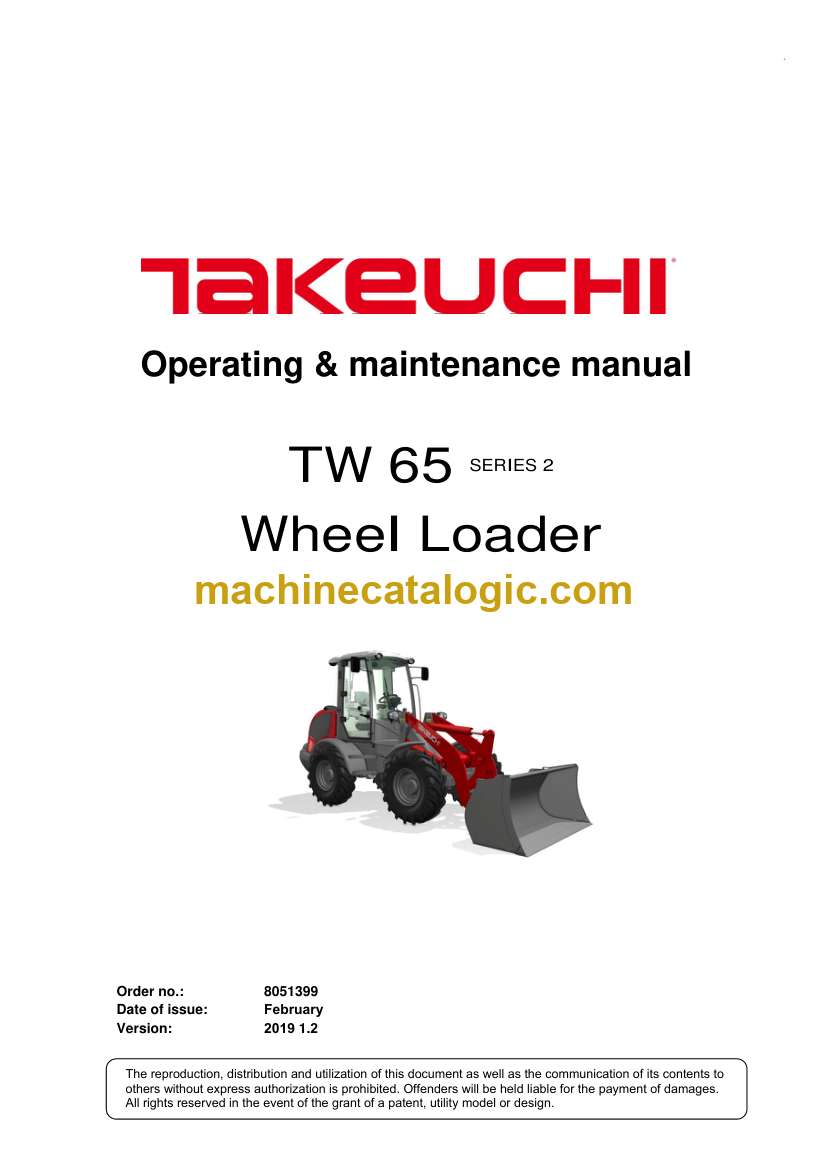
Model: TW65 Series 2 Wheel Loader
Book No: 8051399
Type of Document: Operation and Maintenance Manual
$ 40
On a TW65 wheel loader that spends its days loading trucks, handling pallets, or feeding hoppers in dusty yards and muddy sites, this Operation and Maintenance Manual is what I use to keep the machine predictable. It lays out a clear rhythm for daily and scheduled checks so you don’t just react to breakdowns—you catch issues early. If, for example, the steering starts to feel loose or inconsistent, I’ll go to this manual to verify the correct inspection points, trace possible causes step by step, and confirm what should be serviced before it turns into a major repair.
Applications & Use Cases
FAQ
Q: Can I keep this manual on a tablet in the cab?
A: Yes, it’s practical to use digitally; you can zoom diagrams and search text, just make sure the device is protected from dust and vibration.
Q: Is it worth printing parts of this manual?
A: Many techs print the inspection schedules and service checklists to hang in the workshop or keep in a jobsite folder for quick reference.
Safety Note
Always follow the manual’s lockout, support, and engine shutdown instructions before inspecting, adjusting, or servicing the loader.
Table of contents
1 Machine designation, manufacturer and notes ………………………………………………… 9
1.1 Machine designation and intended use ……………………………………………………………………………. 9
1.1.1 Intended purpose and designated use ……………………………………………………………………………… 9
1.2 Manufacturer …………………………………………………………………………………………………………………… 9
1.2.1 Name and address of the manufacturer ……………………………………………………………………………. 9
1.2.2 Contact …………………………………………………………………………………………………………………………. 9
1.3 Type plate and serial number …………………………………………………………………………………………. 10
1.3.1 Type plate labeling and serial number …………………………………………………………………………….. 10
1.5 User instructions …………………………………………………………………………………………………………… 11
1.6 Change in ownership (e.g. by selling the wheel loader) …………………………………………………… 11
1.7 Notes on this operating and maintenance manual ………………………………………………………….. 12
1.7.1 Signal word panels und safety alert symbols in the operating and maintenance manual ……….. 12
1.7.2 Further notes on this operating and maintenance manual …………………………………………………. 13
2 Safety information ……………………………………………………………………………………….. 14
2.1 General use of the wheel loader …………………………………………………………………………………….. 14
2.2 Working with the wheel loader ……………………………………………………………………………………….. 15
2.3 Safety instructions in emergencies ………………………………………………………………………………… 16
2.4 Vibrations ……………………………………………………………………………………………………………………… 16
2.4.1 Hand and arm vibration ………………………………………………………………………………………………… 16
2.4.2 Whole-body vibration ……………………………………………………………………………………………………. 16
3 Technical specifications ………………………………………………………………………………. 17
3.1 Operating data ………………………………………………………………………………………………………………. 17
3.2 Tires ……………………………………………………………………………………………………………………………… 17
3.3 Fill levels ……………………………………………………………………………………………………………………….. 17
3.4 Diesel engine …………………………………………………………………………………………………………………. 18
3.5 Electrical system …………………………………………………………………………………………………………… 18
3.6 Roll-over protection system (ROPS) ………………………………………………………………………………. 18
3.7 Falling-object protective structures (FOPS) ……………………………………………………………………. 18
3.8 Dimensions …………………………………………………………………………………………………………………… 19
4 Transporting the wheel loader ………………………………………………………………………. 20
4.1 Securing the wheel loader for transport …………………………………………………………………………. 20
4.2 Loading and securing the wheel loader ………………………………………………………………………….. 20
4.2.1 Loading the wheel loader onto a flat bed truck …………………………………………………………………. 20
4.2.2 Securing the wheel loader on the transport vehicle ………………………………………………………….. 21
4.2.3 Carrying out the transport ……………………………………………………………………………………………… 22
4.2.4 Crane transport ……………………………………………………………………………………………………………. 22
4.2.5 Recovery …………………………………………………………………………………………………………………….. 22
Getting acquainted with the wheel loader ……………………………………………………… 23
5.1 Overview: Assembly groups ………………………………………………………………………………………….. 23
5.2 Overview: Enclosed cabin ……………………………………………………………………………………………… 24
5.3 Warning notices and labels ……………………………………………………………………………………………. 25
6 Before starting the wheel loader …………………………………………………………………… 27
6.1 Prior to the initial start …………………………………………………………………………………………………… 27
6.2 Checking the wheel loader …………………………………………………………………………………………….. 27
6.3 Refueling (Diesel) ………………………………………………………………………………………………………….. 28
6.4 Accessing the operator`s station ……………………………………………………………………………………. 29
6.5 Individual settings: Driver´s seat ……………………………………………………………………………………. 30
6.5.1 Weight setting ……………………………………………………………………………………………………………… 30
6.5.2 Height setting ………………………………………………………………………………………………………………. 30
6.5.3 Longitudinal adjustment ………………………………………………………………………………………………… 30
6.5.4 Armrests ……………………………………………………………………………………………………………………… 31
6.5.5 Backrest inclination ………………………………………………………………………………………………………. 31
6.5.6 Backrest extension (headrest) – optional feature ……………………………………………………………… 32
6.5.7 Seat heating – optional feature ………………………………………………………………………………………. 32
6.6 Fastening the safety belt ………………………………………………………………………………………………… 33
6.7 Adjustable steering column……………………………………………………………………………………………. 33
6.8 Adjusting the exterior mirrors ………………………………………………………………………………………… 34
7 Control elements and displays ……………………………………………………………………… 35
7.1 Overview ……………………………………………………………………………………………………………………….. 35
7.1.1 The dashboard …………………………………………………………………………………………………………….. 35
7.1.2 Sections of the central display ……………………………………………………………………………………….. 35
7.1.3 Operating states ………………………………………………………………………………………………………….. 35
7.1.4 Displays ……………………………………………………………………………………………………………………… 36
7.1.5 Service and error messages ………………………………………………………………………………………….. 37
7.1.6 On / off buttons on the dashboard ………………………………………………………………………………….. 38
7.1.7 Driving speed ………………………………………………………………………………………………………………. 39
7.2 Layout and functions of switches & buttons in the enclosed cab ……………………………………. 40
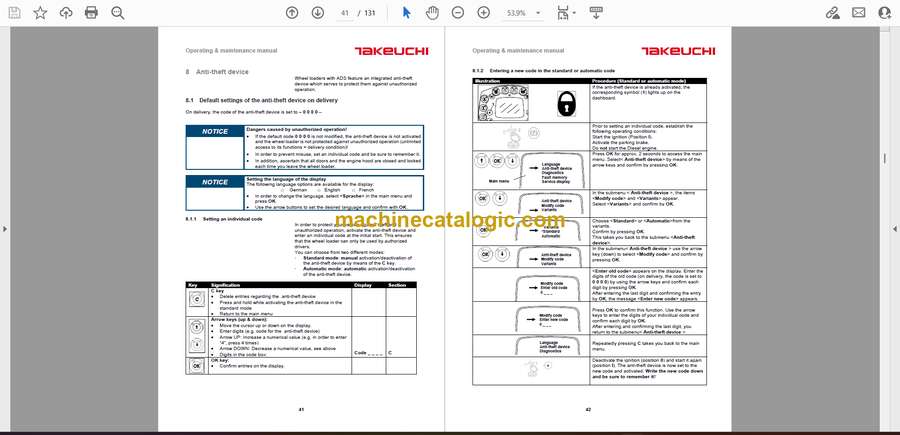
8 Anti-theft device …………………………………………………………………………………………… 41
8.1 Default settings of the anti-theft device on delivery ………………………………………………………… 41
8.1.1 Setting an individual code ……………………………………………………………………………………………… 41
8.1.2 Entering a new code in the standard or automatic code ……………………………………………………. 42
8.1.3 Starting the wheel loader with the anti-theft device activated …………………………………………….. 43
8.1.4 Blocking access to the vehicle and locking it: Standard mode ……………………………………………. 43
8.1.5 Blocking access to the vehicle and locking it: Automatic mode ………………………………………….. 43
Operating & maintenance manual
4
9 Starting, driving and stopping the wheel loader …………………………………………….. 44
9.1 Prior to the initial start …………………………………………………………………………………………………… 44
9.2 Starting the Diesel engine ………………………………………………………………………………………………. 44
9.2.1 Checks prior to starting the Diesel engine ……………………………………………………………………….. 44
9.2.2 Activating the ignition ……………………………………………………………………………………………………. 44
9.2.3 Starting the Diesel engine ……………………………………………………………………………………………… 45
9.2.4 Problems regarding the Diesel engine start …………………………………………………………………….. 45
9.3 Driving the wheel loader ………………………………………………………………………………………………… 46
9.3.1 Forward motion ……………………………………………………………………………………………………………. 46
9.3.2 Stopping the forward motion ………………………………………………………………………………………….. 46
9.3.3 Stopping the wheel loader to work …………………………………………………………………………………. 47
9.3.4 Reverse motion ……………………………………………………………………………………………………………. 47
9.3.5 Stopping the reverse motion ………………………………………………………………………………………….. 47
9.3.6 Changing direction ……………………………………………………………………………………………………….. 48
9.3.7 Turn signals ………………………………………………………………………………………………………………… 48
9.3.8 Stopping and parking the wheel loader …………………………………………………………………………… 48
9.3.9 Stopping the Diesel engine ……………………………………………………………………………………………. 48
9.3.10 Leaving the wheel loader …………………………………………………………………………………………… 49
9.3.11 Parking and securing the wheel loader on slopes …………………………………………………………. 49
9.3.12 Driving on non-public roads ……………………………………………………………………………………….. 50
9.3.13 Establishing the driving position …………………………………………………………………………………. 50
9.3.14 Setting the road mode ………………………………………………………………………………………………. 50
9.3.15 Off-road operation on non-public terrain ………………………………………………………………………. 51
9.3.16 Selecting the work mode …………………………………………………………………………………………… 51
9.3.17 Off-road operation on non-public terrain ………………………………………………………………………. 51
9.4 Setting gears …………………………………………………………………………………………………………………. 52
9.4.1 Gears, modes and driving speeds ………………………………………………………………………………….. 53
9.4.2 Inching (Creeping motion) …………………………………………………………………………………………….. 54
9.4.3 Driving on slippery grounds …………………………………………………………………………………………… 54
9.4.4 Deactivating the differential lock …………………………………………………………………………………….. 54
9.4.5 Driving on slopes …………………………………………………………………………………………………………. 55
9.4.6 Parking and securing the vehicle on slopes …………………………………………………………………….. 55
9.5 Driving in the dark or poor visibility conditions ………………………………………………………………. 56
9.5.1 Activating the lighting ……………………………………………………………………………………………………. 56
9.5.2 Light switch …………………………………………………………………………………………………………………. 56
9.5.3 Brights ………………………………………………………………………………………………………………………… 56
9.5.4 Headlamp flasher …………………………………………………………………………………………………………. 56
9.5.5 Horn …………………………………………………………………………………………………………………………… 57
9.5.6 Hazard warning lights …………………………………………………………………………………………………… 57
9.5.7 Work lights & rotating light (optional feature) ……………………………………………………………………. 57
9.6 Driving in poor conditions ……………………………………………………………………………………………… 58
9.6.1 Wipers and windshield washer system ……………………………………………………………………………. 58
9.6.2 Front windshield washer system ……………………………………………………………………………………. 58
9.6.3 Rear wiper and windshield washer system ……………………………………………………………………… 58
9.6.4 Poor visibility caused by steamed up window panes ………………………………………………………… 59
9.6.5 Ventilation system………………………………………………………………………………………………………… 59
9.6.6 Heating unit …………………………………………………………………………………………………………………. 59
9.6.7 Drying the windows without the heating ………………………………………………………………………….. 60
9.6.8 Drying the windows with the defroster …………………………………………………………………………….. 60
9.6.9 Rear window defroster ………………………………………………………………………………………………….. 60
9.7 Line-of-sight obstruction ……………………………………………………………………………………………….. 60
9.8 Driving on public roads ………………………………………………………………………………………………….. 61
9.9 Approved attachments …………………………………………………………………………………………………… 61
9.9.1 Operating conditions for the use of attachments ………………………………………………………………. 61
9.9.2 Required checks prior to operating the wheel loader on public roads …………………………………. 61
10 Towing the wheel loader ………………………………………………………………………………. 62
10.1 Safety information referring to the towing process …………………………………………………………. 62
10.2 Measures to be taken prior to towing ……………………………………………………………………………… 62
10.2.1 Securing the wheel loader against rolling …………………………………………………………………….. 62
10.2.3 Opening (releasing) the HP valves at the traction pump ………………………………………………… 63
10.2.4 Deactivating (releasing) the parking brake …………………………………………………………………… 63
10.2.5 Carrying out the towing process …………………………………………………………………………………. 64
10.2.6 After towing ……………………………………………………………………………………………………………… 64
10.2.7 Closing the HP valves at the traction pump ………………………………………………………………….. 65
10.2.8 Activating the parking brake ………………………………………………………………………………………. 65
11 Working with the wheel loader ……………………………………………………………………… 66
11.1 Safety information referring to work with the wheel loader ……………………………………………… 66
11.2 Control elements related to working with the wheel loader ……………………………………………… 67
11.2.1 Joystick functions ……………………………………………………………………………………………………… 67
11.2.2 Electrical switchover of the HQC ………………………………………………………………………………… 68
11.3 Connecting attachments ………………………………………………………………………………………………… 69
11.3.1 Using attachments ……………………………………………………………………………………………………. 69
11.3.2 Prior to connecting attachments …………………………………………………………………………………. 69
11.3.3 Using the HQC to connect an attachment ……………………………………………………………………. 70
11.3.4 Locking (securing) the attachment ……………………………………………………………………………… 70
11.3.5 Releasing or changing attachments ……………………………………………………………………………. 71
11.4 Working with attachments ……………………………………………………………………………………………… 71
11.4.1 Working and driving with the bucket and load ………………………………………………………………. 71
11.4.2 Transporting material ………………………………………………………………………………………………… 72
11.4.3 Dumping material ……………………………………………………………………………………………………… 72
11.4.4 Transporting material on slopes …………………………………………………………………………………. 72
11.4.5 Working and driving with the pallet forks ……………………………………………………………………… 73
Operating & maintenance manual
6
11.4.6 Picking up material with the pallet forks ………………………………………………………………………. 73
11.4.7 Transporting material on the pallet forks ……………………………………………………………………… 73
11.4.8 Unloading material from the pallet forks ………………………………………………………………………. 74
12 Working with attachments ……………………………………………………………………………. 75
12.1.1 Using the third section ………………………………………………………………………………………………. 75
12.2 Road sweeping ……………………………………………………………………………………………………………… 76
12.2.1 Permanent operation of the 3rd section (Button III) ………………………………………………………… 77
12.3 Emergency lowering in the event of a power loss …………………………………………………………… 77
13 Failures and trouble shooting ………………………………………………………………………. 78
13.1 Detecting faults and failures…………………………………………………………………………………………… 78
13.1.1 Speed limitation ……………………………………………………………………………………………………….. 81
14 Maintenance instructions ……………………………………………………………………………… 82
14.1 Safety information referring to maintenance work ………………………………………………………….. 82
14.1.1 Safety instructions referring to maintenance work…………………………………………………………. 82
14.1.2 After completing maintenance work ……………………………………………………………………………. 82
14.2 Overview: Maintenance ………………………………………………………………………………………………….. 83
14.2.1 Overview: Engine compartment………………………………………………………………………………….. 83
14.2.2 Overview: Loader and front end …………………………………………………………………………………. 84
15 Maintenance instructions for the driver …………………………………………………………. 85
15.1.1 Required maintenance measures ……………………………………………………………………………….. 85
15.1.2 Tools and lubricants for maintenance work ………………………………………………………………….. 85
15.1.3 Required spare parts for maintenance work: Maintenance kits ………………………………………. 85
15.1.4 Table of lubricants ……………………………………………………………………………………………………. 86
15.2 Check list: Required maintenance work for Maintenance Certificate A ……………………………. 87
15.3 Maintenance certificate A: Daily maintenance work ………………………………………………………… 88
15.3.1 Check / clean prior to starting the wheel loader ……………………………………………………………. 88
15.3.2 Lubrication ………………………………………………………………………………………………………………. 88
15.3.3 Engine oil level …………………………………………………………………………………………………………. 89
15.3.4 Hydraulic oil level ……………………………………………………………………………………………………… 90
15.3.5 Brakes …………………………………………………………………………………………………………………….. 90
15.3.6 Windshield washer system ………………………………………………………………………………………… 90
15.3.7 Combined cooler (engine coolant and hydraulic oil) ……………………………………………………… 91
15.3.8 Tire inflation pressure ……………………………………………………………………………………………….. 92
15.3.9 Cleaning the wheel loader after each operation ……………………………………………………………. 92
15.4 Maintenance intervals with ADS …………………………………………………………………………………….. 93
15.4.1 Table of maintenance intervals and measures ……………………………………………………………… 93
15.5 Overview: Further maintenance and service intervals …………………………………………………….. 94
15.5.1 At intervals of 100 operating hours (Maintenance certificate B) ………………………………………. 94
15.5.2 At intervals of 500 operating hours (Maintenance certificate C) ………………………………………. 94
15.5.3 Summary: Periodical maintenance measures ………………………………………………………………. 94
16 Maintenance instructions for the service staff ……………………………………………….. 95
16.1 Required maintenance measures …………………………………………………………………………………… 95
16.1.1 Tools and lubricants for maintenance work ………………………………………………………………….. 95
16.1.2 Required spare parts for maintenance work: Maintenance kits ………………………………………. 95
16.2 Check list: Required maintenance work for Maintenance Certificate B ……………………………. 96
16.3 Maintenance certificate B: At intervals of 100 operating hours ……………………………………….. 97
16.3.1 Lubrication ………………………………………………………………………………………………………………. 97
16.3.2 Wheels ……………………………………………………………………………………………………………………. 97
16.3.3 Electrical system ………………………………………………………………………………………………………. 98
16.3.4 Combined cooler (cleaning procedure with compressed air) ………………………………………….. 98
16.3.5 Air filter ……………………………………………………………………………………………………………………. 99
Cleaning the main filter cartridge …………………………………………………………………………………………. 100
16.3.6 Brake fluid level ……………………………………………………………………………………………………… 101
16.4 Check list: Required maintenance work for Maintenance Certificate C ………………………….. 102
16.5 Maintenance certificate C: At intervals of 500 operating hours ……………………………………… 104
16.5.1 Axles …………………………………………………………………………………………………………………….. 104
16.5.2 Tire inflation pressure ……………………………………………………………………………………………… 104
16.5.3 Electrical system …………………………………………………………………………………………………….. 104
16.5.4 Required lamps for the lighting system ……………………………………………………………………… 105
16.5.5 Fuses: Overview …………………………………………………………………………………………………….. 106
17 Cleaning and preservation ………………………………………………………………………….. 107
17.1 Cleaning the engine……………………………………………………………………………………………………… 107
17.2 Long term storage ……………………………………………………………………………………………………….. 107
17.3 Final shutdown of the wheel loader ………………………………………………………………………………. 108
18 Initial operation ………………………………………………………………………………………….. 109
18.1 Delivery receipt of the wheel loader ……………………………………………………………………………… 109
18.1.1 Checking the operating state of the wheel loader ……………………………………………………….. 109
18.2 Instruction and demonstration at the machine ……………………………………………………………… 110
18.2.1 Vehicle documents and operating manual …………………………………………………………………. 110
18.2.2 Control elements and displays ………………………………………………………………………………….. 111
18.2.3 Working with the wheel loader ………………………………………………………………………………….. 111
18.2.4 Driving the wheel loader ………………………………………………………………………………………….. 112
18.2.5 Maintenance ………………………………………………………………………………………………………….. 112
18.3 Check list: 1st inspection after 50 operating hours ………………………………………………………… 113
18.3.1 Checking the fill levels …………………………………………………………………………………………….. 113
18.3.2 Lubricating the front end and the loader …………………………………………………………………….. 113
18.3.3 Screw connections ………………………………………………………………………………………………….. 113
Operating & maintenance manual
8
18.3.4 Checking the axles …………………………………………………………………………………………………. 114
18.3.5 Hydraulic system ……………………………………………………………………………………………………. 114
18.3.6 Diesel engine …………………………………………………………………………………………………………. 115
18.3.7 Checking functions …………………………………………………………………………………………………. 115
19 Air conditioner …………………………………………………………………………………………… 116
19.1 General safety information …………………………………………………………………………………………… 116
19.2 Intended purpose and designated use ………………………………………………………………………….. 117
19.3 Overview: Components ………………………………………………………………………………………………… 117
19.4 Operation of the air conditioning unit …………………………………………………………………………… 118
19.4.1 Safety information regarding the operation of the air conditioning unit …………………………… 118
19.5 Maintenance of the air conditioning unit ………………………………………………………………………. 119
19.5.1 Safety information regarding maintenance and repair work ………………………………………….. 119
19.5.2 Recommended maintenance intervals …………………………………………………………………….. 120
19.6 Failures and trouble shooting ………………………………………………………………………………………. 122
19.6.1 Heating capacity …………………………………………………………………………………………………….. 122
19.6.2 Cooling capacity …………………………………………………………………………………………………….. 123
19.6.3 Noise level …………………………………………………………………………………………………………….. 124
20 Verification of inspections ………………………………………………………………………….. 125
20.1 Verification: 1st inspection (50 operating hours) ……………………………………………………………. 125
20.2 Verification: Correct delivery procedure and execution of all lubrication
and maintenance work ………………………………………………………………………………………………… 126
21 Annex A: Optional feature: High-flow auxiliary hydraulics ……………………………. 127
21.1.1 Technical specifications …………………………………………………………………………………………… 127
21.1.2 Operating elements referring to the operation of the high-flow auxiliary hydraulics ………….. 127
21.1.3 Using the 3rd section with the high-flow auxiliary hydraulics ………………………………………….. 128
21.1.4 Working with the high-flow auxiliary hydraulics …………………………………………………………… 128
22 Table of figures ………………………………………………………………………………………….. 129
23 Index …………………………………………………………………………………………………………. 130