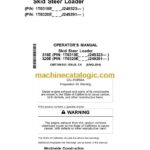
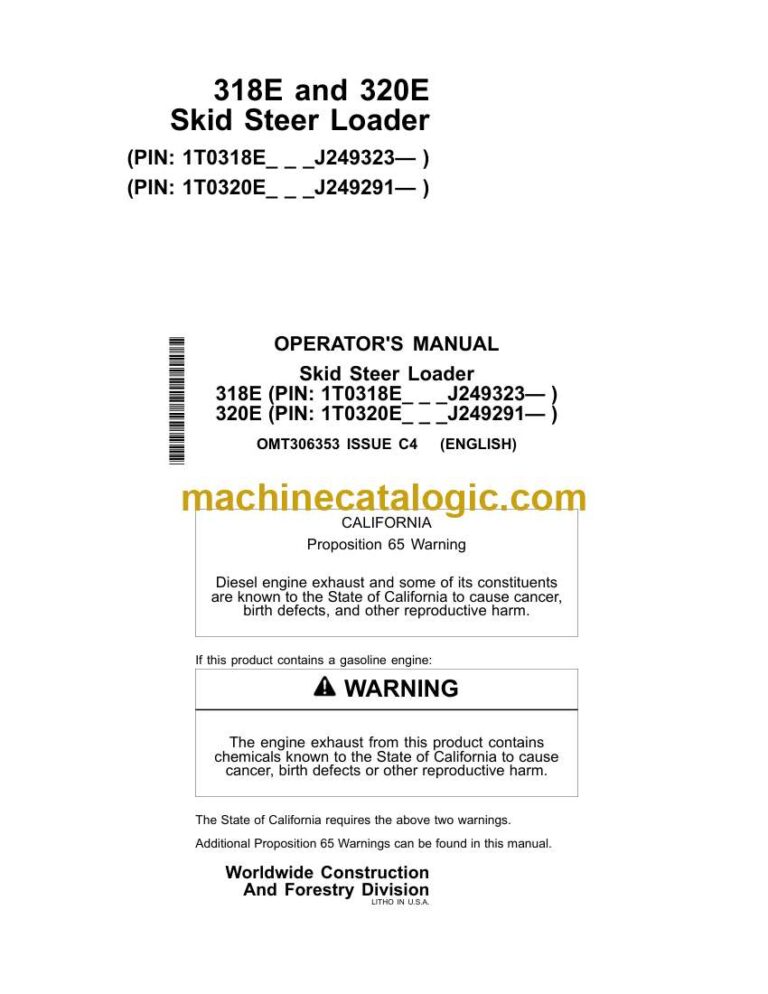
John Deere 318E and 320E Skid Steer Loader Operator Manual (OMT306353)
Machine throws a hydraulic overheat warning, operator swears nothing’s changed, and you’re burning an hour every shift babysitting cooldowns. This 318E/320E operator manual tells you the exact operating ranges, hydraulic temps, fan behavior, and duty-cycle limits so you can stop guessing and run the loader inside the specs it was built for. Less guessing, less downtime.
Key Tasks Covered:
- Set correct engine speed and hydraulic flow for continuous loader/aux use.
- Configure and use the cooling system properly (fan, debris cleaning intervals).
- Interpret every dash icon and warning light before something cooks.
- Adjust operating techniques for different attachments so you don’t dead-head hydraulics.
- Do daily/10-hour checks that actually prevent shutdowns (fluids, screens, filters).
- Use proper start/stop and regen procedures so it restarts instead of sulking.
Common Questions:
Q: Why does it keep throwing hydraulic temp warnings when the oil level’s fine?
A: You’re likely over-speeding the hydraulics with low engine RPM and plugged coolers; manual shows the correct RPM band and cleaning interval for the cooler and screens.
Q: Can I run high-flow attachments all day?
A: Yes, but only within the duty cycle and ambient temp limits listed; exceed those and the system heat-soaks and derates.
Safety Note: Don’t bypass interlocks or seat switches to “test” something—these loaders will bite.
John Deere 318E and 320E Skid Steer Loader Index:
- Contents
- Safety—Safety and Operator Conveniences
- Safety and Operator Convenience Features
- Safety—General Precautions
- Recognize Safety Information
- Follow Safety Instructions
- Operate Only If Qualified
- Wear Protective Equipment
- Avoid Unauthorized Machine Modifications
- Inspect Machine
- Stay Clear of Moving Parts
- Avoid High-Pressure Fluids
- Avoid High-Pressure Oils
- Work In Ventilated Area
- Avoid Static Electricity Risk When Refueling
- Prevent Fires
- Prevent Battery Explosions
- Handle Chemical Products Safely
- Dispose of Waste Properly
- Prepare for Emergencies
- Clean Debris from Machine
- Safety—Operating Precautions
- Use Steps and Handholds Correctly
- Start Only From Operator’s Seat
- Use and Maintain Seat Belt
- Prevent Unintended Machine Movement
- Avoid Work Site Hazards
- Keep Riders Off Machine
- Avoid Backover Accidents
- Avoid Machine Tip Over
- Operating On Slopes
- Operating or Traveling On Public Roads
- Inspect and Maintain ROPS
- Add and Operate Attachments Safely
- Safety—Maintenance Precautions
- Park and Prepare for Service Safely
- Service Cooling System Safely
- Remove Paint Before Welding or Heating
- Make Welding Repairs Safely
- Drive Metal Pins Safely
- Service Tires Safely
- Handle Cab Door Safely
- Clean Exhaust Filter Safely
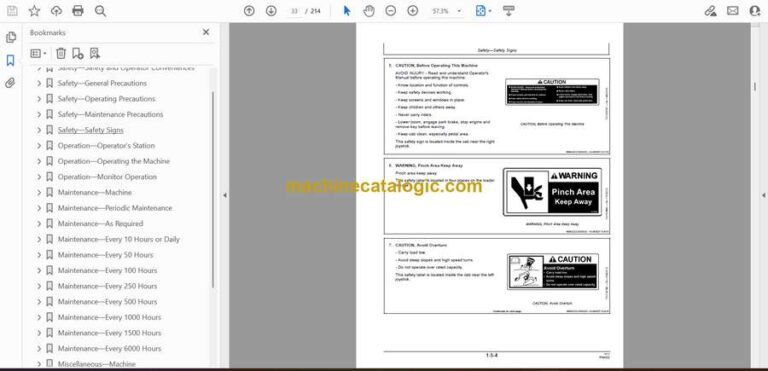
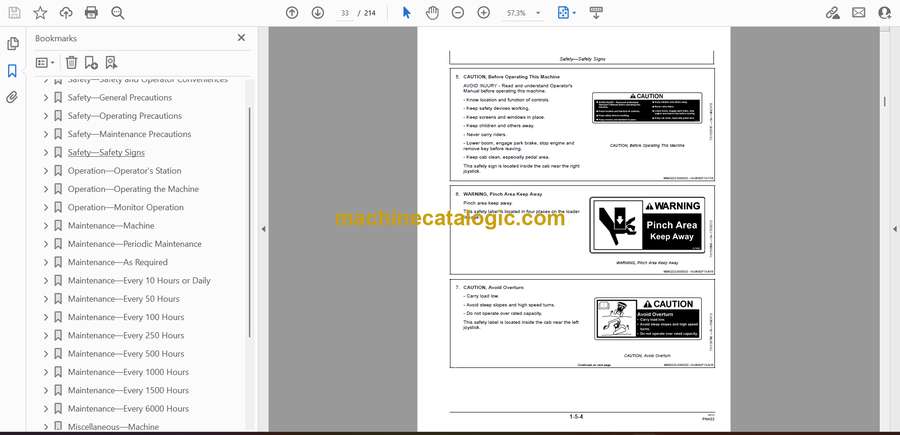
- Safety—Safety Signs
- Operation—Operator’s Station
- Machine Control
- Control Panel—Key Start
- Control Panel—Keyless Start
- Sealed Switch Module (SSM)
- Gauges and Indicators
- Interlocking Seat Bar
- Cab Door—If Equipped
- Side Windows—If Equipped
- Top Window
- Rear Window (Secondary Exit)
- Fire Extinguisher Location
- 12-Volt Power Outlet
- Heating/Defrosting Controls—If Equipped
- Air Conditioning Controls—If Equipped
- Seat Adjustment
- Dome Light
- Radio—If Equipped
- Horn Button—If Equipped
- Beacon—If Equipped
- Operation—Operating the Machine
- Before Starting Work
- Operator’s Daily Machine Check Before Starting
- Entering and Exiting Skid Steer Loader
- Starting the Engine
- Cold Weather Starting
- Engine Block Heater—If Equipped
- Engine Speed Control
- Stopping the Engine
- Exhaust Filter
- Boom Lock
- Boom Release
- Steering—Manual Controls
- Operating Boom—Manual Controls
- Operating Bucket—Manual Controls
- Steering—EH Controls
- Operating Boom—EH Controls
- Operating Bucket—EH Controls
- Joystick Performance Package—If Equipped
- Transmission Response Rate (Travel and Steer)—If Equipped
- Switchable Controls—If Equipped
- Hydraulic Response Rate (Boom and Bucket)—If Equipped
- Creep Mode—If Equipped
- Attachment Mounting System—Quik-Tatch™
- Auto-Idle
- Connecting and Disconnecting Auxiliary Hydraulics
- Operating Auxiliary Hydraulics
- Hydraulic System Pressure Release—Manual Controls
- Hydraulic System Pressure Release—EH Controls
- Self Leveling Hydraulics—If Equipped
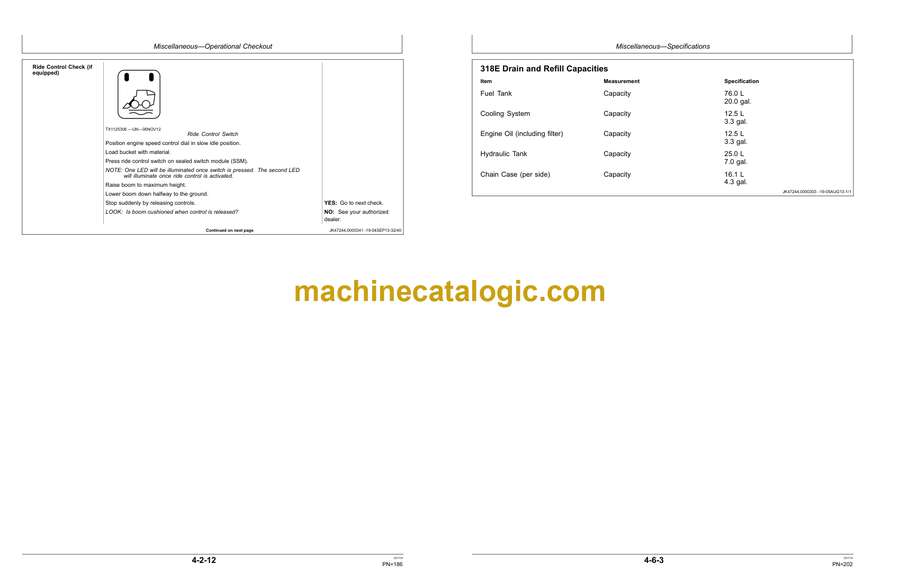
- Ride Control—If Equipped
- High Flow Hydraulics—If Equipped
- Two-Speed Operation—If Equipped
- Loading Machine On a Trailer
- Operation—Monitor Operation
- Engagement and Monitor Unit (EMU)
- Engagement and Monitor Unit (EMU)—Normal Display
- Engagement and Monitor Unit (EMU) Display Messages
- Engagement and Monitor Unit (EMU)—Main Menu
- Engagement and Monitor Unit (EMU)—Main Menu—Auxiliary Hydraulic Override
- Engagement and Monitor Unit (EMU)—Main Menu—Creep Limit
- Engagement and Monitor Unit (EMU)—Main Menu—Courtesy Lighting
- Engagement and Monitor Unit (EMU)—Main Menu—Fan Reverse Interval
- Engagement and Monitor Unit (EMU)—Main Menu—Codes
- Engagement and Monitor Unit (EMU)—Main Menu—Monitor
- Engagement and Monitor Unit (EMU)—Main Menu—Job Timer
- Engagement and Monitor Unit (EMU)—Main Menu—Auto-Idle
- Engagement and Monitor Unit (EMU)—Main Menu—Exhaust Filter
- Engagement and Monitor Unit (EMU)—Main Menu—Exhaust Filter—Auto Cleaning
- Engagement and Monitor Unit (EMU)—Main Menu—Exhaust Filter—Parked Cleaning
- Engagement and Monitor Unit (EMU)—Anti-Theft—If Equipped
- Auto-Shutdown With Alarm
- Maintenance—Machine
- Diesel Fuel
- Lubricity of Diesel Fuel
- Handling and Storing Diesel Fuel
- Biodiesel Fuel
- Supplemental Diesel Fuel Additives
- Testing Diesel Fuel
- Fuel Filters
- Minimizing the Effect of Cold Weather on Diesel Engines
- Operating in Cold Temperature Climates
- Operating at High Altitude
- Alternative and Synthetic Lubricants
- Diesel Engine Break-In Oil
- Diesel Engine Oil
- Engine Oil and Filter Service Intervals
- Oil Filters
- Diesel Engine Coolant (engine without wet sleeve cylinder liners)
- Drain Intervals for Diesel Engine Coolant
- John Deere COOL-GARD™ II Coolant Extender
- Supplemental Coolant Additives
- Operating in Warm Temperature Climates
- Additional Information About Diesel Engine Coolants and John Deere COOL-GARD™ II Coolant Extender
- Testing Diesel Engine Coolant
- Hydraulic and Hydrostatic Oil
- Chain Case Oil
- Grease
- Maintenance—Periodic Maintenance
- Engine Identification
- Service Machine at Specified Intervals
- Fuel Tank
- Raising and Blocking Machine
- Raising Operator’s Station
- Opening and Closing Engine Cover
- Engine Side Panels—Remove and Install
- Footwell Removal
- Fluid Analysis Program Test Kits and 3-Way Coolant Test Kit
- Service Intervals
- Required Parts
- Maintenance—As Required
- Check and Clean Cooling Package
- Check Coolant
- Check Tire Pressure
- Check Wheel Lug Nut Torque
- Check Cab Fresh Air and Recirculation Air Filters—If Equipped
- Check Fuel Tank Breather
- Replace Primary Engine Air Filter
- Replace Secondary Engine Air Filter
- Check and Drain Primary Fuel Filter and Water Separator
- Check Accessory Drive Belt
- Service Exhaust Filter
- Lubricate Steering Centering Mechanism—If Equipped
- Maintenance—Every 10 Hours or Daily
- Check Engine Oil Level
- Check Hydraulic Oil Level
- Check Coolant Level
- Lubricate Boom Linkage, Cylinder Pivot Points, and Quik-Tatch™ Linkage
- Maintenance—Every 50 Hours
- Check and Clean Dust Unloader Valve
- Maintenance—Every 100 Hours
- Check and Adjust Accessory Drive Belt Tension
- Maintenance—Every 250 Hours
- Maintenance—Every 500 Hours
- Change Engine Oil and Replace Oil Filter
- Replace Primary Fuel Filter and Water Separator
- Replace Final Fuel Filter
- Replace Hydraulic Oil Filter
- Lubricate Steering Linkage—If Equipped
- Check Chain Case Oil Level
- Take Fluid Samples
- Maintenance—Every 1000 Hours
- Check Coolant
- Replace Fuel Tank Breather
- Replace Hydraulic Oil Reservoir Breather
- Change Hydraulic Oil
- Change Chain Case Oil
- Maintenance—Every 1500 Hours
- Check and Adjust Engine Valve Lash
- Maintenance—Every 6000 Hours
- Drain Cooling System
- Flush Cooling System
- Fill Cooling System
- Miscellaneous—Machine
- Bleed Fuel System
- Do Not Service Control Valves, Cylinders, Pumps, or Motors
- Precautions for Alternator and Regulator
- Handling Batteries Safely
- Using Battery Charger
- Using Booster Batteries—12-Volt System
- Removing Battery
- Replacing Battery
- Welding On Machine
- Keep Electronic Control Unit Connectors Clean
- Remove and Install Halogen Bulbs
- Adding Rear Counterweights
- Replacing Accessory Drive Belt
- Adjusting Boom and Bucket Linkage—Manual Hands Only Controls
- Adjusting Pedal Angle—Manual Hand and Foot Controls
- Replacing Fuses
- Replacing Glow Plug Fuse
- Hardware Torque Specifications
- Unified Inch Bolt and Screw Torque Values
- Metric Bolt and Screw Torque Values
- Miscellaneous—Operational Checkout
- Operational Checkout
- Diagnostic Trouble Code Check
- Operational Checks—Switched Power OFF, Engine OFF Checks
- Operational Checks—Switched Power ON, Engine OFF Checks
- Operational Checks—Switched Power ON, Engine ON Checks
- Miscellaneous—Troubleshooting
- Troubleshooting Procedure
- Engine
- Electrical System
- Hydraulic System
- Miscellaneous—Machine Storage
- Prepare Machine for Storage
- Monthly Storage Procedure
- Miscellaneous—Machine Numbers
- Record Product Identification Number (PIN)
- Record Engine Serial Number
- Keep Proof of Ownership
- Keep Machines Secure
- Miscellaneous—Specifications
- 318E Machine Dimensions
- 318E Machine Specifications
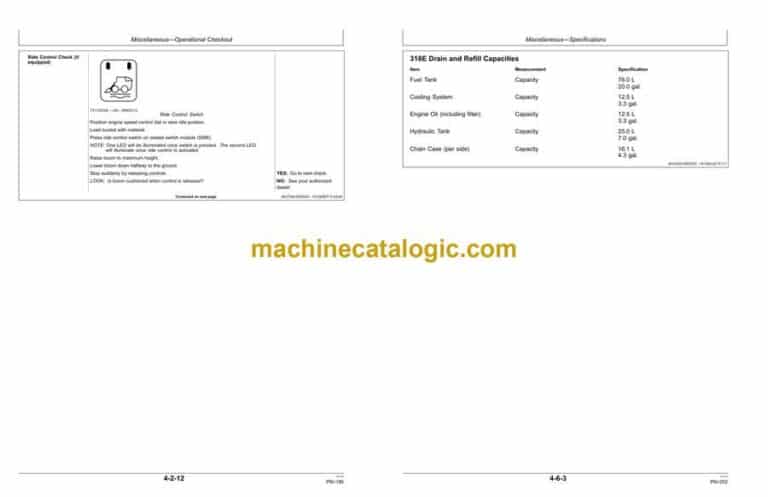
- 318E Drain and Refill Capacities
- 320E Machine Dimensions
- 320E Machine Specifications
- 320E Drain and Refill Capacities
- Rated Operating Capacity
- Pallet Fork Lift Chart
- Page Number
- Section 1-1
- Section 1-2
- Section 1-3
- Section 1-4
- Section 1-5
- Section 2-1
- Section 2-2
- Section 2-3
- Section 3-1
- Section 3-2
- Section 3-3
- Section 3-4
- Section 3-5
- Section 3-6
- Section 3-7
- Section 3-8
- Section 3-9
- Section 3-10
- Section 3-11
- Section 4-1
- Section 4-2
- Section 4-3
- Section 4-4
- Section 4-5
- Section 4-6
John Deere